Rear suspension operation
- Make
- Rover
- Model
- 200 Workshop Manual
- Year
- 1995–1999
- Section
- Description and operation › Rear suspension operation
REAR SUSPENSION OPERATION
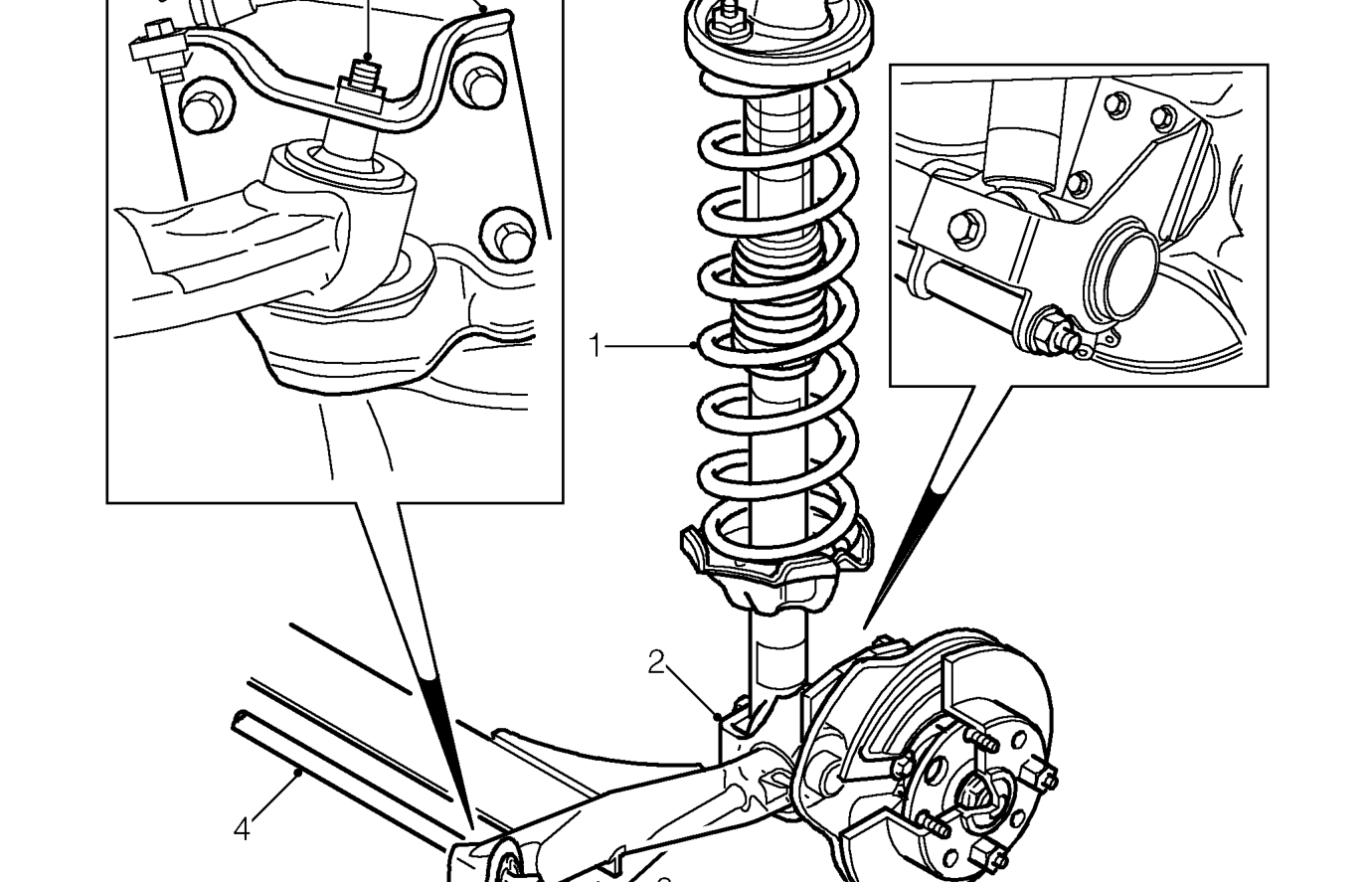
Rear suspension - model with disc brakes illustrated
- Coil spring and damper assembly
- ’H’ frame
- Pivot bush
The rear suspension consists of a ’H’ frame with coil springs and telescopic shock absorbers. The widely used ’twist beam’ principle has been refined; instead of laterally aligned pivot bushes, they are angled and have a special construction. Each bush consists of a combination of rubber, steel interleaving and voids which results in precisely tuned responses in different directions; the forward/rearward rate is substantially higher than the vertical and lateral rates.
- Anti-roll bar (where fitted)
- Pivot bush bolt
- ’H’ frame mounting bracket
Additional stiffening is provided by a 16 mm diameter anti-roll bar on diesel models and an 18 mm diameter anti-roll bar on 200 vi and 1.8 models. Vertical suspension movements are absorbed and controlled by the spring and damper arrangement. Under hard cornering conditions, the slight sideways displacement of the twist beam assembly is gradually arrested by a ’snubber’ which is an integral part of the bush. The effect is that, the rear wheels start to steer in phase with the front wheels.
The kerb height of the 200 vi and 1.8 models is 20 mm lower than the diesel and standard models.
Parts & tools for this job For 1995 Rover 200
- TOOLCoil spring compressorSearch: coil spring compressor
- TOOLBall joint separatorSearch: ball joint separator
- PARTRear shock absorbersSearch: Rover 200 1995 rear shock absorbers
Links open Amazon search results in a new tab. As an Amazon Associate I earn from qualifying purchases.