
Coolant change
- Make
- Fiat
- Model
- Stilo Factory Service Manual
- Year
- 2001–2007
- Section
- New units and planned maintenance. › Coolant change
Coolant change
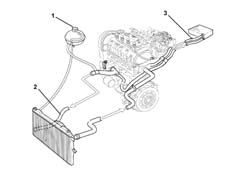
Drain the engine cooling system following the instructions below.
When the engine is hot, do not remove the tank cap; there is a danger of burn injury.
1. Unscrew the expansion tank.
Position a suitable container beneath the radiator to collect the coolant.
2. Disconnect the lower radiator hose and drain the engine coolant.
The engine coolant damages paintwork. avoid any contact with painted surfaces.
3. Open the bleed on the heater coolant pipe and wait until the cooling system is completely drained.
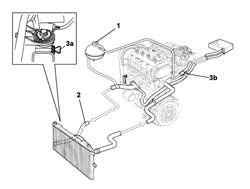
1. Undo the expansion tank cap.
When the engine is hot, do not remove the tank cap; there is a danger of burn injury.
Position a suitable container to collect the coolant.
2. Disconnect the lower radiator hose.
3. Open bleeds (3a) and (3b) found respectively on the radiator and on the heater return hose.
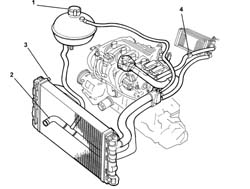
Drain the engine cooling system following the instructions below.
When the engine is hot, do not remove the tank cap; there is a danger of burn injury.
1. Unscrew the expansion tank.
Position a suitable container beneath the radiator to collect the coolant.
2. Disconnect the lower radiator hose and drain the engine coolant.
The engine coolant damages paintwork. avoid any contact with painted surfaces.
3. Open the bleed located on the radiator.
4. Open the bleed on the heater coolant pipe and wait until the cooling system is completely drained.
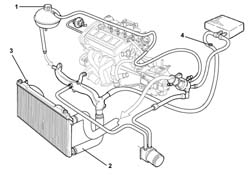
Drain the engine cooling system following the instructions below.
When the engine is hot, do not remove the tank cap; there is a danger of burn injury.
1. Unscrew the expansion tank.
Position a suitable container beneath the radiator to collect the coolant.
2. Disconnect the lower radiator hose and drain the engine coolant.
The engine coolant damages paintwork. avoid any contact with painted surfaces.
3. Open the bleed located on the radiator.
4. Open the bleed on the heater coolant pipe and wait until the cooling system is completely drained.
Drain the engine cooling system following the instructions below.
When the engine is hot, do not remove the tank cap; there is a danger of burn injury.
1. Unscrew the expansion tank.
Position a suitable container beneath the radiator to collect the coolant.
2. Disconnect the lower radiator hose and drain the engine coolant.
The engine coolant damages paintwork. avoid any contact with painted surfaces.
3. Open the bleed located on the radiator.
4. Open the bleed on the heater coolant pipe and wait until the cooling system is completely drained.
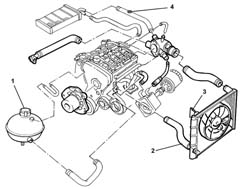
Drain the engine cooling system following the instructions below.
When the engine is hot, do not remove the tank cap; there is a danger of burn injury.
1. Unscrew the expansion tank.
Position a suitable container beneath the radiator to collect the coolant.
2. Disconnect the lower radiator hose and drain the engine coolant.
The engine coolant damages paintwork. avoid any contact with painted surfaces.
3. Open the bleed located on the radiator.
4. Open the bleed on the heater coolant pipe.
5. Open the bleed on the pump rigid coolant supply pipe and wait until the cooling system is completely drained.
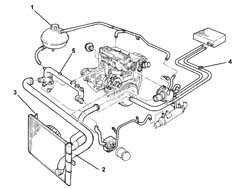
Drain the engine cooling system following the instructions below.
When the engine is hot, do not remove the tank cap; there is a danger of burn injury.
1. Unscrew the expansion tank.
Position a suitable container beneath the radiator to collect the coolant.
2. Disconnect the lower radiator hose and drain the engine coolant.
The engine coolant damages paintwork. avoid any contact with painted surfaces.
3. Open the bleed located on the radiator.
4. Open the bleed on the heater coolant pipe.
5. Open the bleed on the rigid coolant supply pipe to the pump and wait until the cooling system is completely drained.
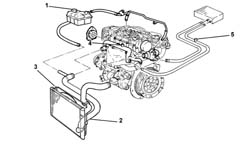
Fill the cooling system as follows:
For vehicles with blue Paraflù 11, use the same fluid.
| Type | Component | Name | Qty. | |
|---|---|---|---|---|
| Fluid (l) | ENGINE COOLING CIRCUIT | PARAFLU 11 | 5.25 |
For vehicles with red Paraflù UP, use the same fluid.
| Type | Component | Name | Qty. | |
|---|---|---|---|---|
| Fluid (l) | ENGINE COOLING CIRCUIT | PARAFLU UP | 5.25 |
NEVER mix the two fluids, always use the same type of fluid as is in the vehicle.
1. Connect the lower engine radiator hose and secure with a new collar
Slowly introduce coolant into the reservoir, taking care to keep the level as close as possible to the MIN mark until coolant comes out of the bleed.
2. Tighten the bleed on the heater pipe as soon as engine coolant comes out.
Complete the engine coolant refilling operation when the MAX reference mark on the reservoir is reached.
3. Close the expansion tank cap.
Start up the engine and keep it idling for at least 2 minutes.
Pump the accelerator at intervals (every 30 seconds) gradually to take engine speed up to 3/4 of the maximum power speed, continuing, if necessary to refill unti the MAX mark is reached.
This operation should be carried out until the engine cooling fan comes on for the first time.
Keep the engine idling for 5 minutes.
Make sure that hot air comes out of the vents in the passenger compartment.
Turn off the engine and wait for the coolant to cool down to a temperature of 25° C or less.
Check that the coolant level is between the MIN and MAX marks on the expansion tank.
If necessary, top up the level by unscrewing the cap and adding coolant.
The quantity of fluid introduced should correspond to at least the amount collected whilst draining the circuit; if this is not the case, top up and repeat the bleeding procedure.
If the coolant starts to boil during starting, switch off the engine and search for the cause of the defective component.
Never exceed the MAX level.
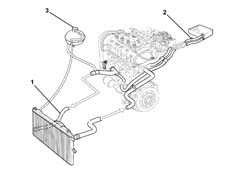
Prepare a 50/50 water / Paraflù mixture in a container, sufficient to fill the circuit
| Type | Component | Name | Qty. | |
|---|---|---|---|---|
| Fluid [l] | "PARAFLU" ANTI-FREEZE FLUID | Mixture of 50% PARAFLU UP /water | 5.25 |
1. Connect the lower radiator hose, replacing the relative retaining band.
Slowly pour the fluid into the special filler on the expansion tank until it comes out of the bleed on the radiator.
2. Close the bleed screw on the radiator (at this point the level of the fluid will be above the MAX reference).
3. Continue pouring until the tank is completely full and fluid comes out of the bleed located on the heater return hose; then close the bleed screw.
Stop pouring in coolant. At this point the tank will be almost completely full (level with the filler, above the MAX reference).
4. Fully tighten the expansion tank cap.
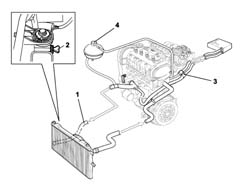
Fill the cooling system as follows:
For vehicles with blue Paraflù 11, use the same fluid.
| Type | Component | Name | Qty. | |
|---|---|---|---|---|
| Fluid (l) | ENGINE COOLING CIRCUIT | PARAFLU 11 | 6.55 |
For vehicles with red Paraflù UP, use the same fluid.
| Type | Component | Name | Qty. | |
|---|---|---|---|---|
| Fluid (l) | ENGINE COOLING CIRCUIT | PARAFLU UP | 6.55 |
NEVER mix the two fluids, always use the same type of fluid as is in the vehicle.
1. Connect the lower engine radiator hose and secure with a new collar
Slowly introduce coolant into the reservoir taking care to keep the level as close as possible to the MIN mark until coolant comes out of the bleed on the radiator.
2. Tighten and close the bleed on the radiator.
3. Continue refilling the system and tighten the bleed screw on the heater pipe as soon as engine coolant comes out.
Complete the engine coolant refilling operation when the MAX reference mark on the reservoir is reached.
4. Close the expansion tank cap.
Start up the engine and keep it idling for at least 2-3 minutes.
Pump the accelerator at intervals (every 30 seconds) gradually to take engine speed up to 3/4 of the maximum power speed, continuing, if necessary to refill until the MAX mark is reached.
This operation should be continued until the engine cooling fan comes on for the first time.
Keep the engine idling for 5 minutes.
Make sure that hot air comes out of the vents in the passenger compartment.
Turn off the engine and wait for the coolant to cool down to a temperature of 25° C or less.
Check that the coolant level is between the MIN and MAX marks on the expansion tank.
If necessary, top up the level by unscrewing the cap and adding coolant.
The quantity of fluid introduced should correspond to at least the amount collected whilst draining the circuit; if this is not the case, top up and repeat the bleeding procedure.
If the coolant starts to boil during starting, switch off the engine and search for the cause of the defective component.
Never exceed the MAX level.
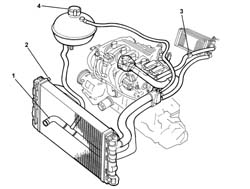
Fill the cooling system as follows:
For vehicles with blue Paraflù 11, use the same fluid.
| Type | Component | Name | Qty. | |
|---|---|---|---|---|
| Fluid (l) | ENGINE COOLING CIRCUIT | PARAFLU 11 | 7.3 |
For vehicles with red Paraflù UP, use the same fluid.
| Type | Component | Name | Qty. | |
|---|---|---|---|---|
| Fluid (l) | ENGINE COOLING CIRCUIT | PARAFLU UP | 7.3 |
NEVER mix the two fluids, always use the same type of fluid as is in the vehicle.
1. Connect the lower engine radiator hose and secure with a new collar
Slowly introduce coolant into the reservoir taking care to keep the level as close as possible to the MIN mark until coolant comes out of the bleed on the radiator.
2. Tighten and close the bleed on the radiator.
3. Continue refilling the system and tighten the bleed screw on the heater pipe as soon as engine coolant comes out.
Complete the engine coolant refilling operation when the MAX reference mark on the reservoir is reached.
4. Close the expansion tank cap.
Start up the engine and keep it idling for at least 2-3 minutes.
Pump the accelerator at intervals (every 30 seconds) gradually to take engine speed up to 3/4 of the maximum power speed, continuing, if necessary to refill until the MAX mark is reached.
This operation should be continued until the engine cooling fan comes on for the first time.
Keep the engine idling for 5 minutes.
Make sure that hot air comes out of the vents in the passenger compartment.
Turn off the engine and wait for the coolant to cool down to a temperature of 25° C or less.
Check that the coolant level is between the MIN and MAX marks on the expansion tank.
If necessary, top up the level by unscrewing the cap and adding coolant.
The quantity of fluid introduced should correspond to at least the amount collected whilst draining the circuit; if this is not the case, top up and repeat the bleeding procedure.
If the coolant starts to boil during starting, switch off the engine and search for the cause of the defective component.
Never exceed the MAX level.
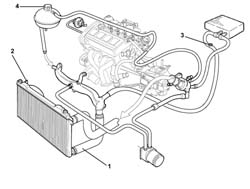
Fill the cooling system as follows:
For vehicles with blue Paraflù 11, use the same fluid.
| Type | Component | Name | Qty. | |
|---|---|---|---|---|
| Fluid (l) | ENGINE COOLING CIRCUIT | PARAFLU 11 | 8 |
For vehicles with red Paraflù UP, use the same fluid.
| Type | Component | Name | Qty. | |
|---|---|---|---|---|
| Fluid (l) | ENGINE COOLING CIRCUIT | PARAFLU UP | 8 |
NEVER mix the two fluids, always use the same type of fluid as is in the vehicle.
1. Connect the lower engine radiator hose and secure with a new collar
Slowly introduce coolant into the reservoir taking care to keep the level as close as possible to the MIN mark until coolant comes out of the bleed on the radiator.
2. Tighten and close the bleed on the radiator.
3. Continue refilling the system and tighten the bleed screw on the heater pipe as soon as engine coolant comes out.
Complete the engine coolant refilling operation when the MAX reference mark on the reservoir is reached.
4. Close the expansion tank cap.
Start up the engine and keep it idling for at least 2-3 minutes.
Pump the accelerator at intervals (every 30 seconds or so) gradually to take engine speed up to 3/4 of the maximum power speed, continuing, if necessary to refill until the MAX mark is reached.
This operation should be continued until the engine cooling fan comes on for the first time.
Keep the engine idling for 5 minutes.
Make sure that hot air comes out of the vents in the passenger compartment.
Turn off the engine and wait for the coolant to cool down to a temperature of 25° C or less.
Check that the coolant level is between the MIN and MAX marks on the expansion tank.
If necessary, top up the level by unscrewing the cap and adding coolant.
The quantity of fluid introduced should correspond to at least the amount collected whilst draining the circuit; if this is not the case, top up and repeat the bleeding procedure.
If the coolant starts to boil during starting, switch off the engine and search for the cause of the defective component.
Never exceed the MAX level.
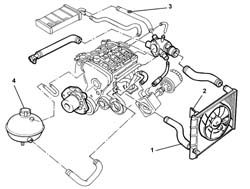
Fill the cooling system as follows:
Take a sufficient quantity of coolant.
For vehicles with blue Paraflù 11, use the same fluid.
| Type | Component | Name | Qty. | |
|---|---|---|---|---|
| Fluid (l) | ENGINE LUBRICATION CIRCUIT | PARAFLU 11 | 7 |
For vehicles with red Paraflù UP, use the same fluid.
| Type | Component | Name | Qty. | |
|---|---|---|---|---|
| Fluid (l) | ENGINE COOLING CIRCUIT | PARAFLU UP | 7 |
NEVER mix the two fluids, always use the same type of fluid as is in the vehicle.
1. Connect the lower engine radiator hose and secure with a new collar
Slowly introduce coolant into the reservoir taking care to keep the level as close as possible to the MIN mark until coolant comes out of the bleed on the radiator.
2. Tighten and close the bleed on the radiator.
3. Continue refilling the system and tighten the bleed screw on the heater pipe as soon as engine coolant comes out.
4. Continue refilling and tighten the bleed on the pump rigid coolant supply pipe as soon as engine coolant comes out.
Complete the engine coolant refilling operation when the MAX reference mark on the reservoir is reached.
5. Close the expansion tank cap.
Start up the engine and keep it idling for at least 2-3 minutes.
Pump the accelerator at intervals (every 30 seconds) gradually to take engine speed up to 3/4 of the maximum power speed, continuing, if necessary to refill until the MAX mark is reached.
This operation should be continued until the engine cooling fan comes on for the first time.
Keep the engine idling for 5 minutes.
Make sure that hot air comes out of the vents in the passenger compartment.
Turn off the engine and wait for the coolant to cool down.
Check that the coolant level is between the MIN and MAX marks on the expansion tank.
If necessary, top up the level by unscrewing the cap and adding coolant.
The quantity of fluid introduced should correspond to at least the amount collected whilst draining the circuit; if this is not the case, top up and repeat the bleeding procedure.
If the coolant starts to boil during starting, switch off the engine and search for the cause of the defective component.
Never exceed the MAX level.
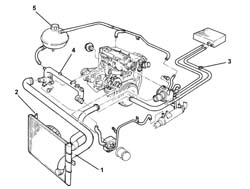
Fill the cooling system as follows:
Take a sufficient quantity of coolant.
| Type | Component | Name | Qty. | |
|---|---|---|---|---|
| Fluid (l) | ENGINE COOLING CIRCUIT | PARAFLU UP | 6.3 |
1. Connect the lower engine radiator hose and secure with a new collar
Slowly introduce coolant into the coolant reservoir taking care not to exceed the MAX reference mark until the coolant comes out of the bleed on the radiator.
2. Tighten and close the bleed on the radiator.
3. Continue refilling the system and tighten the bleed screw on the heater pipe as soon as engine coolant comes out.
4. Continue refilling the system and tighten the bleed screw on the pump rigid coolant supply pipe as soon as engine coolant comes out.
Complete the engine coolant refilling operation when the MAX reference mark on the reservoir is reached.
5. Close the expansion tank cap.
Start up the engine and keep it idling for at least 2 minutes.
Pump the accelerator at intervals gradually to take engine speed up to 3000 rpm, continuing, if necessary, to fill until the MAX reference mark is reached.
Make sure that hot air is coming out of the vents in the passenger compartment.
This operation should be carried out until the fan has come on at least twice.
Turn off the engine and wait for the coolant to cool down.
Check that the coolant level is between the MIN and MAX marks on the expansion tank.
If necessary, top up the level by unscrewing the cap and adding coolant.
The quantity of fluid introduced should correspond to at least the amount collected whilst draining the circuit; if this is not the case, top up and repeat the bleeding procedure.
If the coolant starts to boil during starting, switch off the engine and search for the cause of the defective component.
| Type | Component | Name | Qty. | |
|---|---|---|---|---|
| Fluid (l) | ENGINE COOLING CIRCUIT | PARAFLU UP | 6.3 |
Never exceed the MAX level.
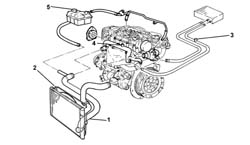
For vehicles with air conditioning, make sure that the air conditioning is not switched on (OFF position).
Start the engine and run it at minimum speed for 2-3 minutes.
Accelerate periodically (every 30 seconds) and gradually up to 3000 rpm.
This operation should be carried out until the engine cooling fan comes on at least three times.
During this stage of the procedure, if the level approaches the MIN reference, unscrew the cap very slowly and carefully and top up the fluid in the reservoir to the MAX reference.
The level in the expansion tank should never drop below the MIN reference.
Refit the expansion tank cap and tighten it.
Pump the accelerator again for a period of 10 min., bringing the engine rpm up to about 4500 rpm. Stop the engine
With the engine cold, undo the cap on the expansion tank and check that the coolant level at the MAX reference and, if necessary, top it up to this level.
If the MAX mark has been exceeded then remove the excess liquid using an appropriate syringe until the liquid is between the set levels.
At the end of these operations, make sure that at least the same amount of fluid has been introduced as that collected when the system was drained.
If the coolant boils during the operations described above with the engine running, the operation should be stopped in order to search for and if necessary replace the faulty component which has caused this.
Once the system has been filled in accordance with the above method, the bleed screws on the radiator and on the heater return hose must not be unscrewed. Failure to respect this requirement will result in the level in the system being incorrect and new air penetration into the circuit.
To check how full the circuit actually is, proceed as follows:
Make sure that the bleed screws on the radiator and on the heater return hose are closed.
Check that the level of the fluid in the expansion tank is at the MAX reference; if this is not the case, top up with the recommended fluid until the level is reached.
Fully close the cap on the expansion tank.
Repeat the operations described above starting from 'For vehicles with air conditioning, make sure that the air conditioning system is not switched on (OFF position)' onwards.
Parts & tools for this job For 2001 Fiat Stilo
- FLUIDCoolantSearch: Fiat coolant antifreeze
- PARTThermostatSearch: Fiat Stilo 2001 thermostat
- TOOLCooling system pressure testerSearch: cooling system pressure tester
Links open Amazon search results in a new tab. As an Amazon Associate I earn from qualifying purchases.