
Flexible pipes and hoses
- Make
- MG
- Model
- TF Factory Workshop Manual
- Year
- 2002–2005
- Section
- General precautions and fitting instructions › Flexible pipes and hoses
FLEXIBLE PIPES AND HOSES
General
When removing and installing flexible hydraulic pipes and hoses, ensure that the following practices are observed to ensure component serviceability.
- Before removing and refitting brake or power steering hose, clean end fittings and area surrounding them as thoroughly as possible.
- Obtain appropriate plugs or caps before detaching hose end fittings, so that the ports can be immediately covered to prevent the ingress of dirt.
- Clean hose externally and blow through with airline. Examine carefully for cracks, separation of plies, security of end fittings and external damage. Reject any faulty hoses.
- When refitting a hose, ensure that no unnecessary bends are introduced, and that the hose is not twisted before or during tightening of union nuts.
- Fit a cap to seal a hydraulic union and a plug to its socket after removal to prevent ingress of dirt.
- Absolute cleanliness must be observed with hydraulic components at all times.
- After any work on hydraulic systems, carefully inspect for leaks underneath the vehicle while a second operator applies maximum brake pressure to the brakes (engine running) and operates the steering.
Fuel system hoses
All fuel hoses are made up of two laminations, an armoured rubber outer sleeve and an inner viton core. If any of the fuel system hoses have been disconnected, it is imperative that the internal bore is inspected to ensure that the viton lining has not become separated from the armoured outer sleeve. A new hose must be fitted if separation is evident.
Cooling system hoses
The following precautions MUST be followed to ensure the integrity of cooling hoses and their connections to system components are maintained.
Hose orientation and connection
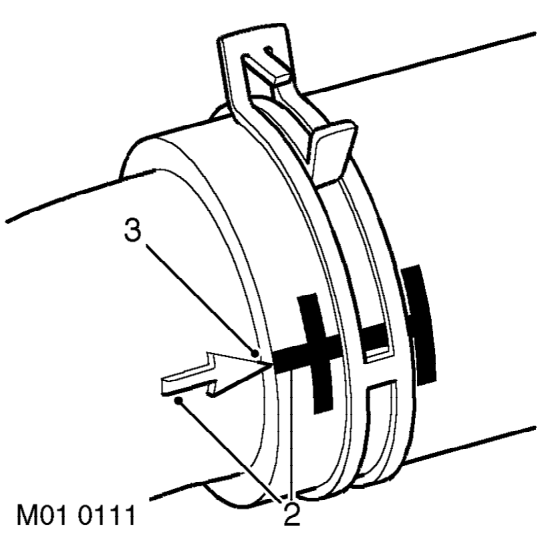
Correct orientation of cooling hoses is important in ensuring that the hose does not become fatigued or damaged through contact with adjacent components. Where ’timing’ marks (2) are provided on the hose and corresponding connection, these must be used to ensure correct orientation. Hoses must be pushed fully onto their connection points. Usually, a moulded form (3) on the stub pipe provides a positive indicator.
Parts & tools for this job For 2002 MG TF
- TOOLTorque wrenchSearch: 3/8 inch torque wrench
- TOOLSocket setSearch: socket set metric
- BOOKHaynes manualSearch: Haynes manual MG TF
Links open Amazon search results in a new tab. As an Amazon Associate I earn from qualifying purchases.