Gearbox pressure test
- Make
- Rover
- Model
- 600 Rover 600 Repair Manual - Volumes 1 and 2 - 2nd Edition
- Section
- Fault finding › Gearbox pressure test
Automatic gearboxGearbox pressure test
GEARBOX PRESSURE TEST
WARNING: During pressure testing, keep clear of front wheels as they may be rotating. Ensure vehicle is properly supported during the tests.
CAUTION: Connect the tool; be sure not to allow dust and other foreign particles to enter the inspection hole.
CAUTION: Before testing, be sure the transmission fluid is filled to the proper level.
- Raise the car.
WARNING: Support on axle stands.
- Warm up the engine (the radiator cooling fan comes on), then stop the engine and connect a tachometer.
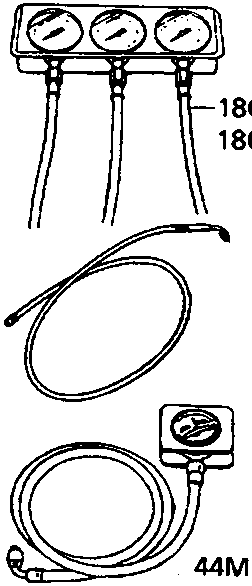
- Connect tools 18G 1554 and 18G 1554 – 2 to each inspection hole.
- Start the engine, and measure the respective pressure as follows:
Line Pressure
Clutch Pressure
Throttle B Pressure
Clutch Low/High Pressure - Install a new washer and the sealing bolt in the inspection hole, and tighten to 18 Nm.
Note: Fit new aluminium washers.
Line Pressure Measurement
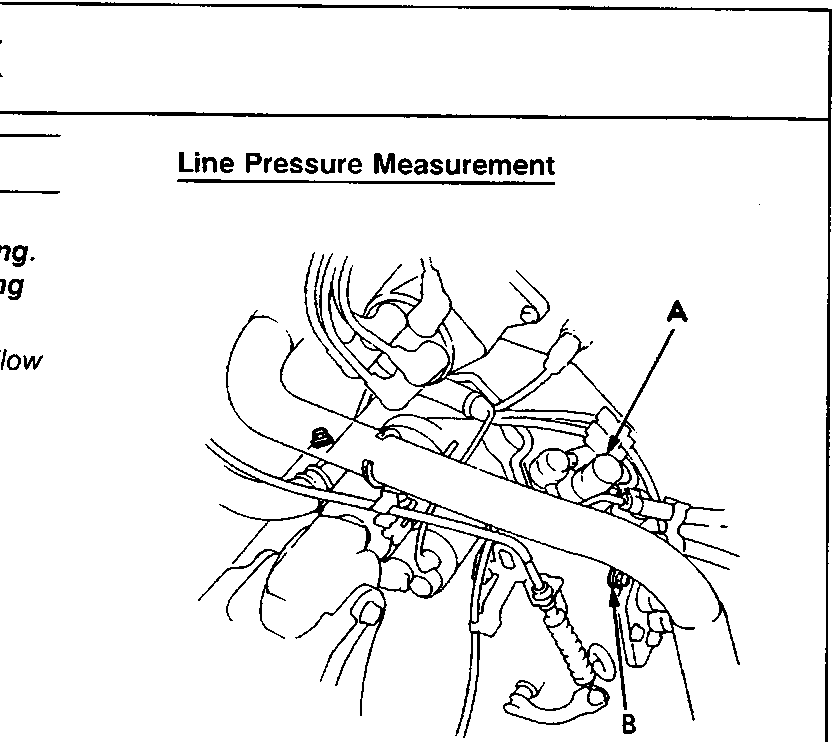
A Lock – up control solenoid valve assembly
B Line pressure inspection hole
- Apply the handbrake and chock both rear wheels securely.
- Run the engine at 2,000 rev/min.
- Select N or P.
Note: Higher pressures may be indicated if measurements are made in selector positions other than N or P.
- Measure line pressure.
Line pressure = 7.5 to 8.5 kg/cm² - If line pressure is low or non – existent, suspect torque converter, pump, pressure regulator or torque converter check valve fault.
Parts & tools for this job For Rover 600
- PARTTransmission filter kitSearch: Rover 600 transmission filter kit
- FLUIDAutomatic transmission fluidSearch: Rover automatic transmission fluid
- TOOLFluid transfer pumpSearch: fluid transfer pump
Links open Amazon search results in a new tab. As an Amazon Associate I earn from qualifying purchases.