
Exhaust, rear section
- Make
- Alfa Romeo
- Model
- 145/146 Engines, 146 Bodywork and Engine Overhaul Manual
- Year
- 1994–2001
- Section
- Exhaust system › Exhaust, rear section
WARNING: When the catalytic converter is removed, though outside it is cold, inside it might still be hot. For this reason NEVER DISCARD THE OLD CONVERTER ON INFLAMMABLE RUBBISH. If an excessive temperature is signalled during operation of the catalytic converter it is advisable to immediately identify the cause in order to avoid irreversible damage to the material forming the silencer itself.
EXHAUST, REAR SECTION
REMOVAL/REFITTING
- Disconnect the handbrake left cable from the fastening clamps.
- Slacken the three bolts fastening the rear section of the exhaust pipe to the catalytic converter.
- Slacken the exhaust pipe rear support bracket fastening screw.
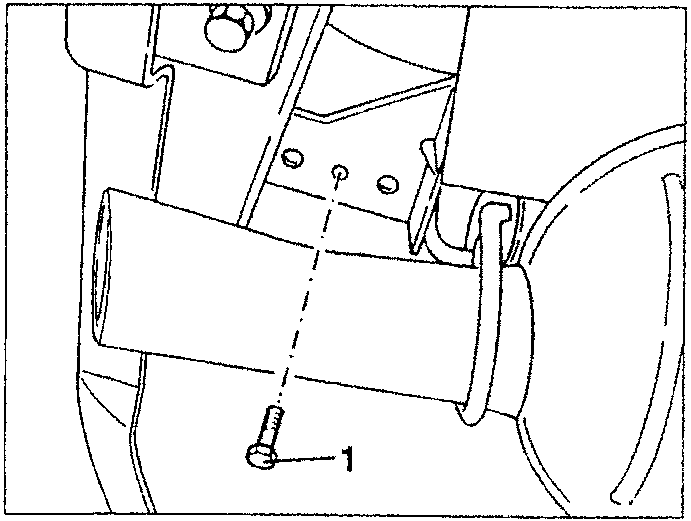
- Remove the rear section of the exhaust pipe releasing it from the support circlips.
- Remove the seal ring.
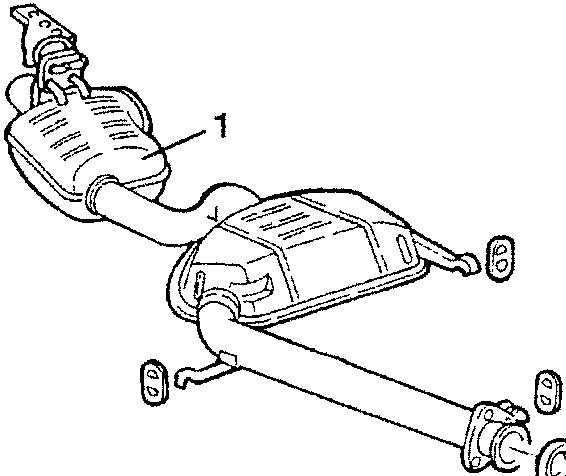
LAMBDA SENSOR
The lambda sensor informs the control unit of the injection and ignition system of the course of combustion of the air - fuel mixture and it enables the system to keep the stoichiometric ratio of the mixture as close as possible to the theoretical value.
Therefore, in order to obtain an optimum mixture, the quantity of air taken in by the engine must be the theoretical quantity required to burn all the fuel injected.
In this case it is said that the lambda factor (λ) is 1, in fact:
THEORETIC QUANTITY OF AIR THAT SERVES TO BURN ALL THE FUEL INJECTED
Therefore:
- λ = 1 IDEAL MIXTURE;
- λ > 1 LEAN MIXTURE;
- λ < 1 RICH MIXTURE
The lambda sensor in contact with the exhaust gases generates an electric signal, the voltage of which depends on the concentration of oxygen contained in the gas.
This voltage changes sharply when the composition of the mixture departs from λ = 1.
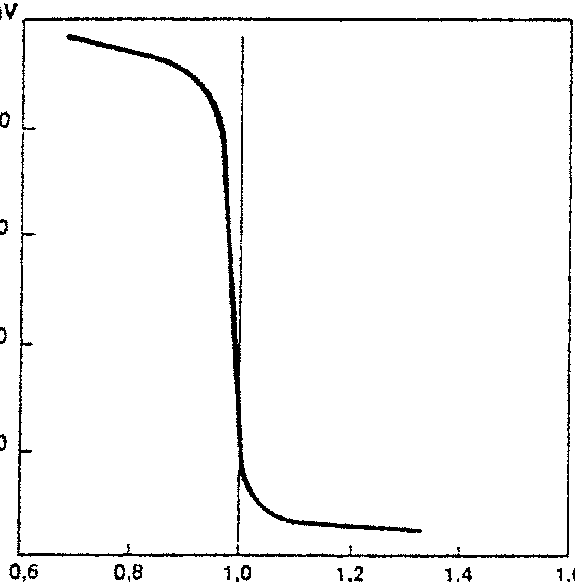
The lambda sensor comprises a ceramic body based on zirconium dioxide, coated with a fine layer of platinum closed at one end, inserted in a metal tube and housed in a metal body which offers further protection and makes it possible to install it on the exhaust manifolds.
The outer part of the ceramic is exposed to the current of exhaust gas, while the inner part communicates with the environment air.
Parts & tools for this job For 1994 Alfa Romeo 145/146
- PARTExhaust gasketSearch: Alfa Romeo 145/146 1994 exhaust gasket
- TOOLPenetrating oilSearch: penetrating oil
- TOOLOBD2 scannerSearch: OBD2 scanner
Links open Amazon search results in a new tab. As an Amazon Associate I earn from qualifying purchases.