
Rpm sensor
- Make
- Fiat
- Model
- Bravo /Brava (182) Factory Service Manual
- Year
- 1995–2001
- Section
- Fuel system (98 range, 1910 JTD) › Rpm sensor
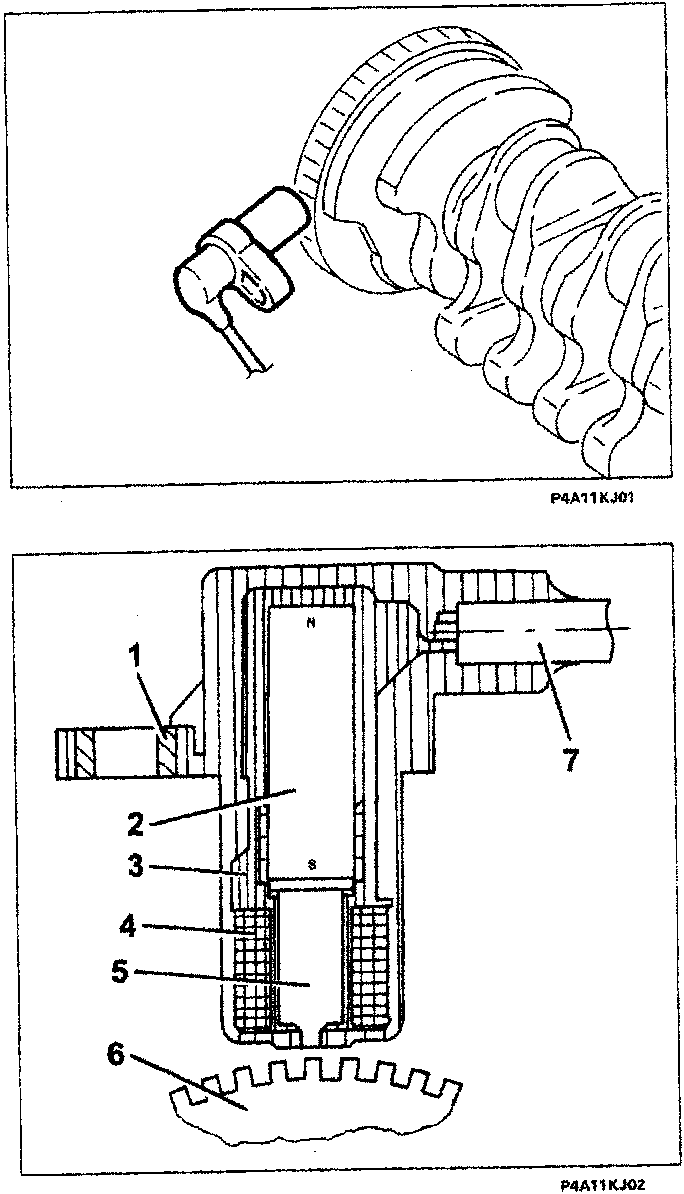
RPM SENSOR
The rpm sensor is fitted on the cylinder block-/crankcase facing the flywheel on the crankshaft.
The sensor is the inductive type, in other words it operates through the variation in the magnetic field produced by the teeth on the flywheel (60-2 teeth) passing in front of the sensor element.
The injection control unit uses the rpm sensor signal to determine the crankshaft angular position and speed.
Operation
The passage from full to empty due to whether or not there is a tooth, determines a variation in the magnetic flow sufficient to produce an alternating voltage from the counting of the teeth on the flywheel.
The peak rpm sensor output voltage depends, all things being equal, on the distance between the sensor and the flywheel teeth.
- Metal bush
- Permanent magnet
- Sensor body
- Winding
- Core
- Flywheel
- Electrical connection
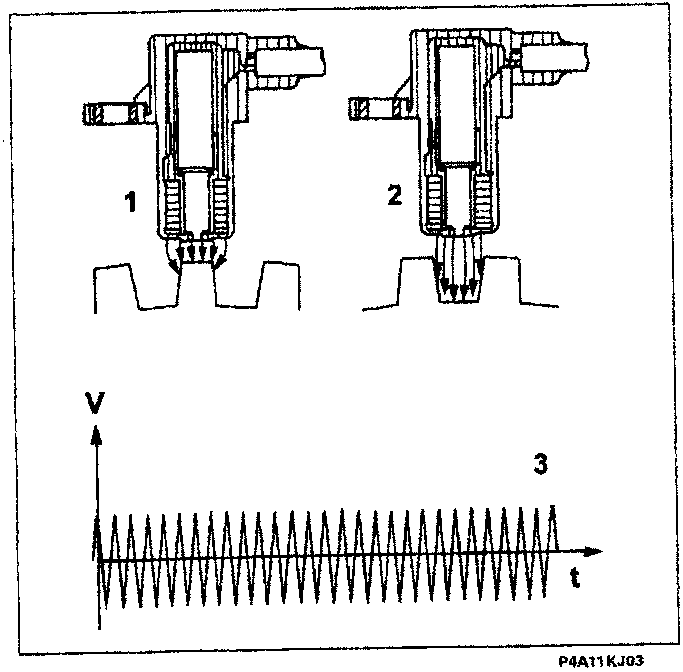
To obtain the correct signals, the recommended distance between the flywheel and the sensor (gap) should be between 0.8 and 1.5 mm.
This distance cannot be adjusted therefore if the gap is outside of the tolerance, check the condition of the sensor and the flywheel.
Winding resistance: 860 Ohm ±10% at 20 °C
- Maximum mangetic flow
- Minimum magnetic flow
- Alternating voltage
Parts & tools for this job For 1995 Fiat Bravo
- TOOLOBD2 scannerSearch: OBD2 scanner
- TOOLDigital multimeterSearch: automotive digital multimeter
- TOOLBack-probe test leadsSearch: back probe test leads
Links open Amazon search results in a new tab. As an Amazon Associate I earn from qualifying purchases.