
A. System self-adaptation
- Make
- Fiat
- Model
- Punto (176) Factory Service Manual
- Year
- 1993–1999
- Section
- Fuel system (1372 T) › A. System self-adaptation
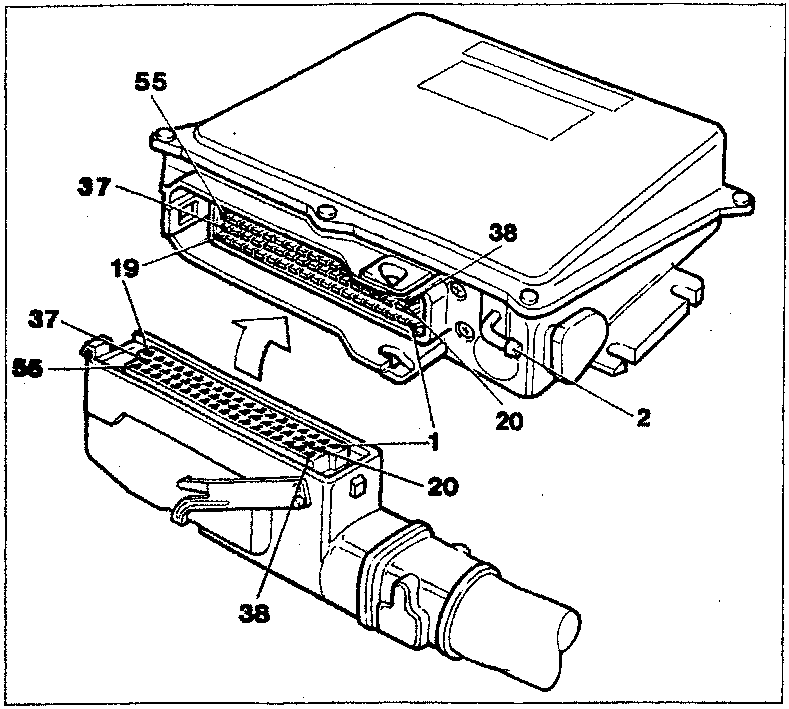
Reference numbers of terminals (pins) on control unit and multiple 55 way connector.
Intake (2) is connected via a pipe to the intake manifold; the pressure signal is used by the control unit to adjust the turbo pressure by piloting the three-way solenoid (Pierburg).
The ECU continually adjusts ignition advance angles and injection pulse duration according to information received in order to perform numerous functions, of which the most important are:
A. System self-adaptation
A fundamental and innovative feature of this system is “self-adaption”: it is able to recognise changes occuring in the engine (different internal friction and different temperatures, settling of engine with time etc.) in order to compensate accordingly.
This self-adaptive function also allows inevitable differences to be made up for (due to manufacturing tolerances) due to replacement parts. This allows the entire vehicle to operate at maximum efficiency without specific adjustments and checks.
B. Fuel metering
On the basis of information on air intake quantity, intake air temperature and coolant temperature, the ECU identifies baseline injection time for correct metering by consulting a special memory map.
C. Controlling cold starts
During start-up, the ECU sends the injectors a signal of sufficient duration and frequency to ensure the necessary fuel enrichment for starting.
An anti-flood function is also included, which is controlled by rpm and duration of starting attempt. Injection time is reduced when the engine does not start immediately for some reason.
D. Engine heating
As the engine heats up, the mixture is enriched and injection times are increased in inverse proportion to coolant temperature.
E. Control of enrichment during over-run
When required to accelerate, the ECU increases injection in order to achieve the required load more quickly. This function is achieved via a potentiometer on the throttle that indicates instantaneously to the ECU that a full power request has been made and anticipates a signal from the debimeter recording a significant increase in air flow to allow an immediate response to be obtained.
Parts & tools for this job For 1993 Fiat Punto
- PARTFuel filterSearch: Fiat Punto 1993 fuel filter
- TOOLFuel pressure test kitSearch: fuel pressure test kit
- TOOLFuel line disconnect toolSearch: fuel line disconnect tool
Links open Amazon search results in a new tab. As an Amazon Associate I earn from qualifying purchases.