
2.2. Servicing
- Make
- Peugeot
- Model
- J5 Pocket Mechanic, 1.8 and 2.0 petrol
- Year
- 1987–1994
- Section
- Servicing › 2.2. Servicing
Measure the travel of the clutch pedal after adjustment. The should be a difference of 180 mm with the pedal fully released and the pedal fully depressed. First measure from the floor panel to the released pedal and then from the floor panel to the edge of the depressed pedal. The difference is the pedal travel.
2.2. Servicing
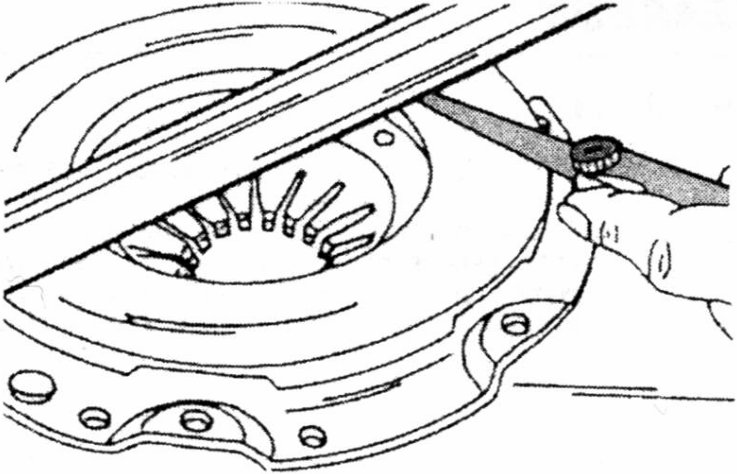
The cover assembly — pressure plate and diaphragm spring — must not be dismantled. Replace, if necessary with a complete assembly from your dealer, quoting the year of manufacture and the chassis number.
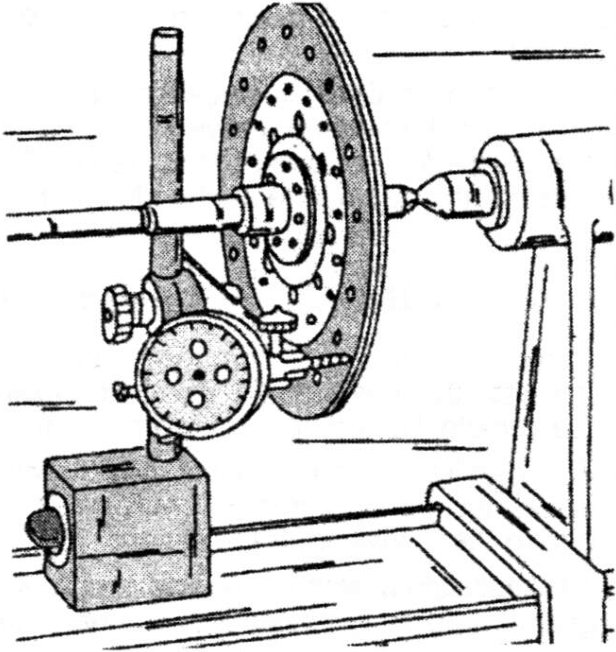
Inspect the driven plate and the linings, replacing the complete plate, if the linings are worn down close to the rivets. Again specify the engine type and model year as differewnt clutch units and driven plates are used since the introduction of the vans. Again depending on the model year, clutch driven plates have different identifications. A driven plate with the linings contaminated with grease or oil cannot be cleaned successfully and should also be replaced. All rivets should be tight and the torsion springs should be sound and unbroken. Check the condition of the driven plate splines. Clamp the driven plate between the centres of a lathe and apply a dial gauge to the outside of the plate as shown in Fig. 2.2, at a diameter of 175.0 mm (6.4 in.).
Parts & tools for this job For 1987 Peugeot J5
- PARTClutch kitSearch: Peugeot J5 1987 clutch kit
- TOOLClutch alignment toolSearch: clutch alignment tool
- FLUIDGear oilSearch: Peugeot J5 manual gearbox oil
Links open Amazon search results in a new tab. As an Amazon Associate I earn from qualifying purchases.