Low/High Pressure Test (page 2 of 2)
- Make
- Rover
- Model
- 600 Rover 600 Repair Manual - Volumes 1 and 2 - 2nd Edition
- Section
- Fault finding
Automatic gearboxLow/High Pressure Test · page 2 of 2
- Warm up the engine to normal operating temperature (the radiator cooling fan comes on).
- With the engine idling, move the selector lever to D4 position.
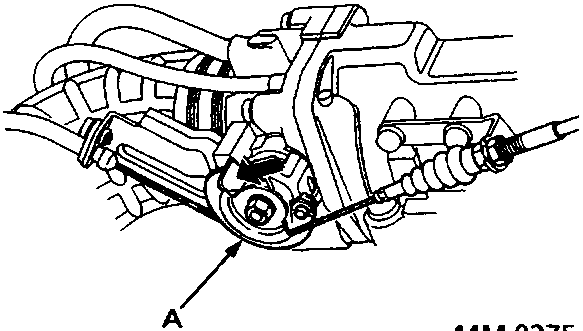
A Throttle linkage
- Slowly increase engine speed until pressure is indicated on the appropriate gauge. Then release the throttle linkage, allowing the engine to return to idle, and note the line reading.
Line pressures
2nd/3rd clutches – engine idling = 4.5 kg/cm².
4th clutch – engine idling = 4.8 kg/cm².
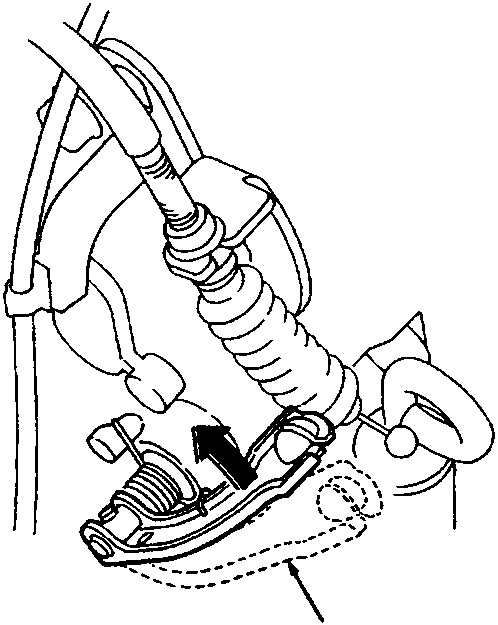
A Throttle control lever
- With the engine idling, lift the throttle control lever at the gearbox up approximately 1/2 of its possible travel and increase the engine speed until pressure is indicated on the appropriate gauge. Record the highest pressure reading obtained.
Line pressure
2nd/3rd clutches = 5.0 to 8.5 kg/cm².
Line pressure 4th clutch = 5.3 to 8.5 kg/cm².
- If line pressure is low or non – existent when pressure testing the clutches, suspect a fault in the clutch being tested.
- Repeat for each clutch pressure being tested.
Parts & tools for this job For Rover 600
- PARTTransmission filter kitSearch: Rover 600 transmission filter kit
- FLUIDAutomatic transmission fluidSearch: Rover automatic transmission fluid
- TOOLFluid transfer pumpSearch: fluid transfer pump
Links open Amazon search results in a new tab. As an Amazon Associate I earn from qualifying purchases.