Flow control circuit (Steering)
- Make
- Rover
- Model
- 400 Workshop Manual
- Year
- 1995–2000
- Section
- Description and operation › Flow control circuit
Flow control circuit
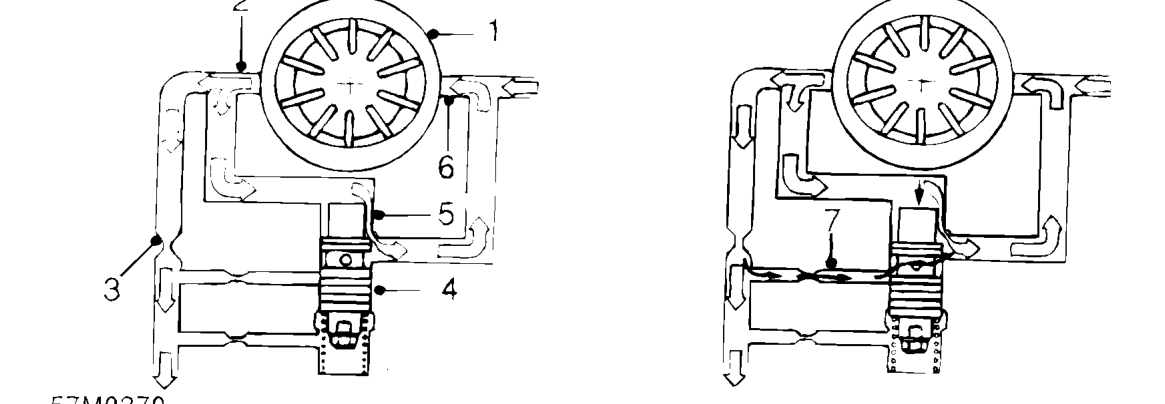
- Pump
- Discharge port
- Metering orifice
- Flow control valve
The flow control valve controls the flow of fluid, increases discharge volume when engine speed is low and decreases it when engine speed increases. The assistance thrust on the steering rack changes in compliance with the change in discharge volume.
At idle, fluid from the discharge port runs through the metering orifice in the pump. The discharge volume increases as the engine speed increases.
A constant and regulated amount of fluid is discharged until engine speed reaches the mid speed range. As engine speed increases, the pressure difference between each side of the metering orifice increases. A pressure difference is created between the top and bottom ends of the flow control valve and the valve is pushed down to open the by-pass passage. This controls pressure and flow by allowing excess fluid to return to the inlet port via the by-pass passage.
- By-pass passage
- Inlet port
- Return passage
As engine speed continues to increase, the flow control valve is pushed down further and at a given speed, the return passage below the metering orifice is connected to the inlet port. This allows part of the fluid regulated by the metering orifice to return to the inlet port; thereby slowly reducing discharged fluid flow by this amount.
The orifice in the return passage regulates and maintains the flow of fluid from the pump at a given level even when engine speeds are high.
Parts & tools for this job For 1995 Rover 400
- TOOLDigital multimeterSearch: automotive digital multimeter
- PARTAssorted fuse kitSearch: car fuse assortment kit
- TOOLWire crimper and connector kitSearch: wire crimper connector kit
Links open Amazon search results in a new tab. As an Amazon Associate I earn from qualifying purchases.