Rear suspension operation
- Make
- Rover
- Model
- 400 Workshop Manual
- Year
- 1995–2000
- Section
- Description and operation › Rear suspension operation
REAR SUSPENSION OPERATION
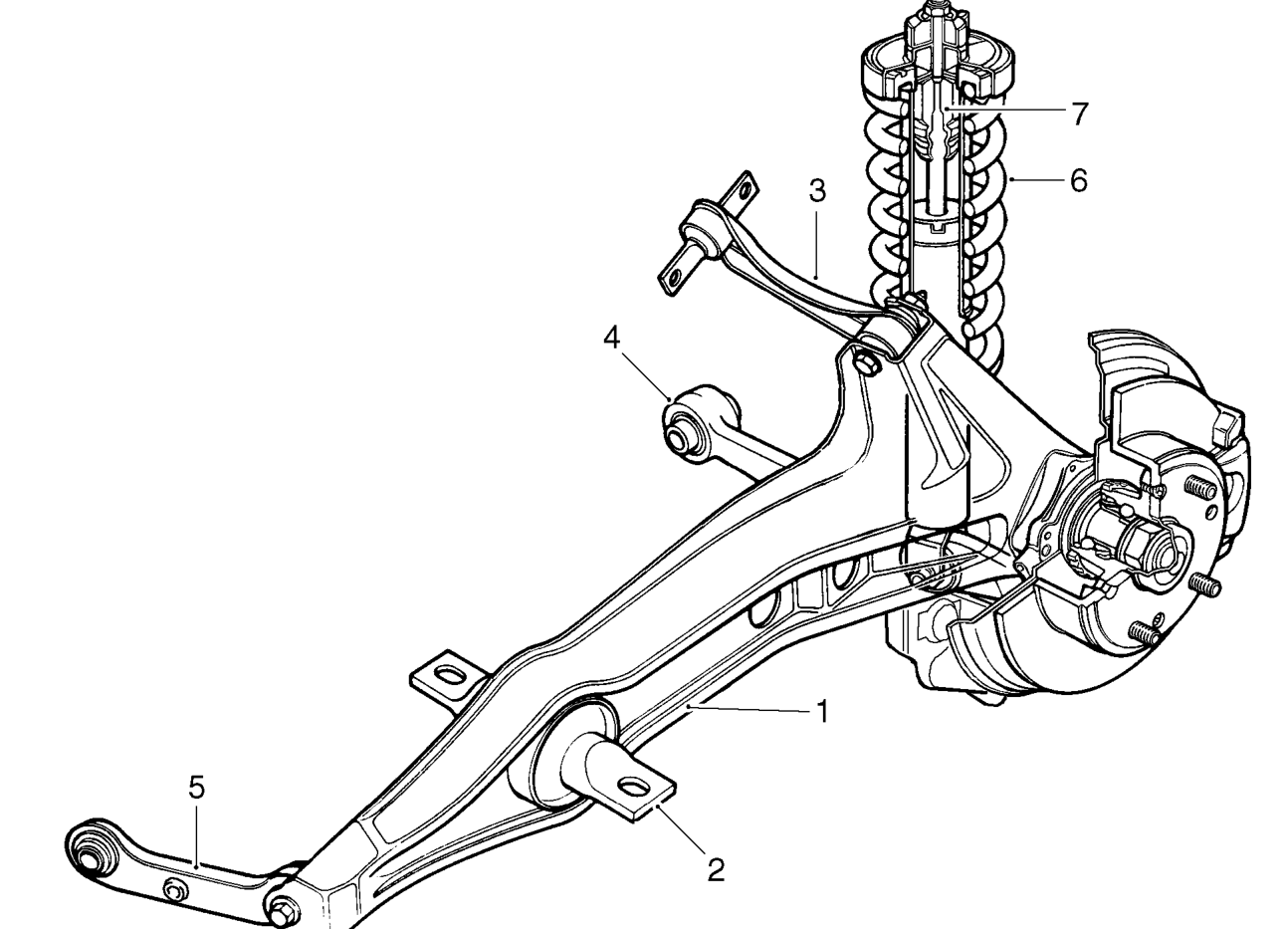
Rear suspension - Disc brake type illustrated
- Trailing arm
- Compliance bush
- Upper radius arm
- Lower radius arm
Developed to ensure quiet operation with a feeling of robustness, the rear suspension is independent, utilising pressed steel trailing arms, each incorporating a large compliance bush. The side members are located each side with upper and lower radius arms, and have a forward toe-control compensating link. The separate spring and damper assembly is mounted to the lower radius arm. The suspension bump stop is at the top of the damper strut.
Performance is similar to double wishbone type suspension with good control of wheel camber.
- Compensating arm - toe-control
- Coil spring and damper assembly
- Bump stop
Vertical suspension movements are absorbed and controlled by the spring and damper assembly and, because lateral loads are controlled by the upper and lower arms, friction on the damper piston is reduced. This permits the spring and damper assembly to be fine tuned for ride quality.
Additional benefits include good isolation of road inputs through compliance of the central bush, and cornering stability together with control of oversteer through toe-in compensation on the outer wheel. Geometry control promotes neutral handling while compliance is allowed to provide a better ride.
Parts & tools for this job For 1995 Rover 400
- TOOLCoil spring compressorSearch: coil spring compressor
- TOOLBall joint separatorSearch: ball joint separator
- PARTRear shock absorbersSearch: Rover 400 1995 rear shock absorbers
Links open Amazon search results in a new tab. As an Amazon Associate I earn from qualifying purchases.