
Ignition advance (1747) 16v
- Make
- Fiat
- Model
- Bravo /Brava (182) Factory Service Manual
- Year
- 1995–2001
- Section
- Fuel system (99 range, 1747 16v) › Ignition advance (1747) 16v
Ignition advance (1747) 16v
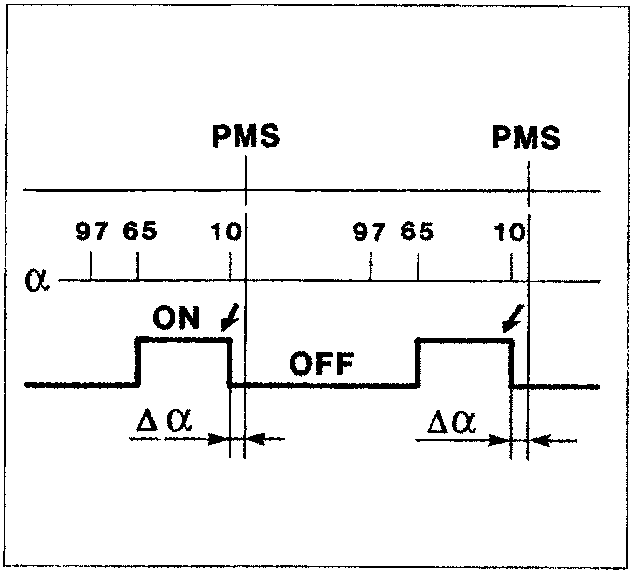
α: crankshaft flywheel square signals
Δα: fixed ignition advance (10° engine)
ON: coil conduction activated
OFF: coil conduction deactivated
Operation in cut-off conditions
The ignition advance is increased on enty into cut-off conditions: from the moment the fuel supply is re-enabled, the advance is gradually returned to the "basic" value.
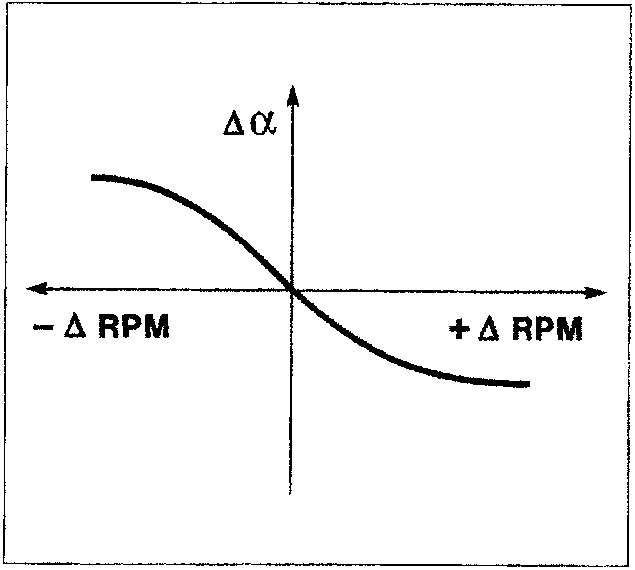
Δα: ignition advance correction whilst idling
+Δ RPM: the idle speed exceeds the nominal value
-Δ RPM: the idle speed is below the nominal value
Starting
During starting, it is not possible to carry out the normal management of the advance because the considerable fluctuations in the rotation speed do not allow the dwell and advance to be calculated correctly.
The advance is therefore managed taking the following as a reference:
- - for the start of conduction, the tooth at 65°;
- - for the ignition advance, the tooth at 10°.
Consequently, there is a fixed advance of 10° for the entire time the engine is driven by the starter motor.
Operation when cold
Whilst the engine is running when cold, an additional advance correction is implemented: the increase in the advance compared with the map value is inversely proportional to the temperature of the engine.
Operation with engine idling
When the engine is idling, the management of the advance is implemented independently of the "basic" advance.
The advance value whilst idling, which varies according to the temperature of the coolant (10° with the engine warm), is corrected according to the variation in the speed in relation to the pre-set speed, which also depends on the temperature.
In particular, the advance is increased if the speed decreases and is reduced if the speed increases in order to guarantee the stability of the actual speed.
Parts & tools for this job For 1995 Fiat Bravo
- PARTFuel filterSearch: Fiat Bravo 1995 fuel filter
- TOOLFuel pressure test kitSearch: fuel pressure test kit
- TOOLFuel line disconnect toolSearch: fuel line disconnect tool
Links open Amazon search results in a new tab. As an Amazon Associate I earn from qualifying purchases.