
UNDER BONNET [HOOD] MAINTENANCE (page 9 of 9)
- Make
- Land Rover
- Model
- Range Rover Classic
- Section
- MAINTENANCE
10
MAINTENANCE
12
MAINTENANCE
EXTERNALLY CHECK INTERCOOLER FOR
OBSTRUCTION - Tdi
Clear any trapped dirt or flies from veins of intercooler
CLEAN INTERCOOLER ELEMENT - Tdi
Remove
1. Remove intercooler element.
2. Flush intercooler with ICI ’GENKLENE’ or
’D-SOLVE’ propriety cleaner, following the
manufacturer’s instructions.
3. Dry the intercooler completely ensuring that no
liquid remains in the element.
Refit
4. Refit intercooler element.
CHECK TURBO CHARGER BOOST PRESSURE -
Tdi
For boost pressure.
See ENGINE TUNING DATA,
Information, Turbocharger
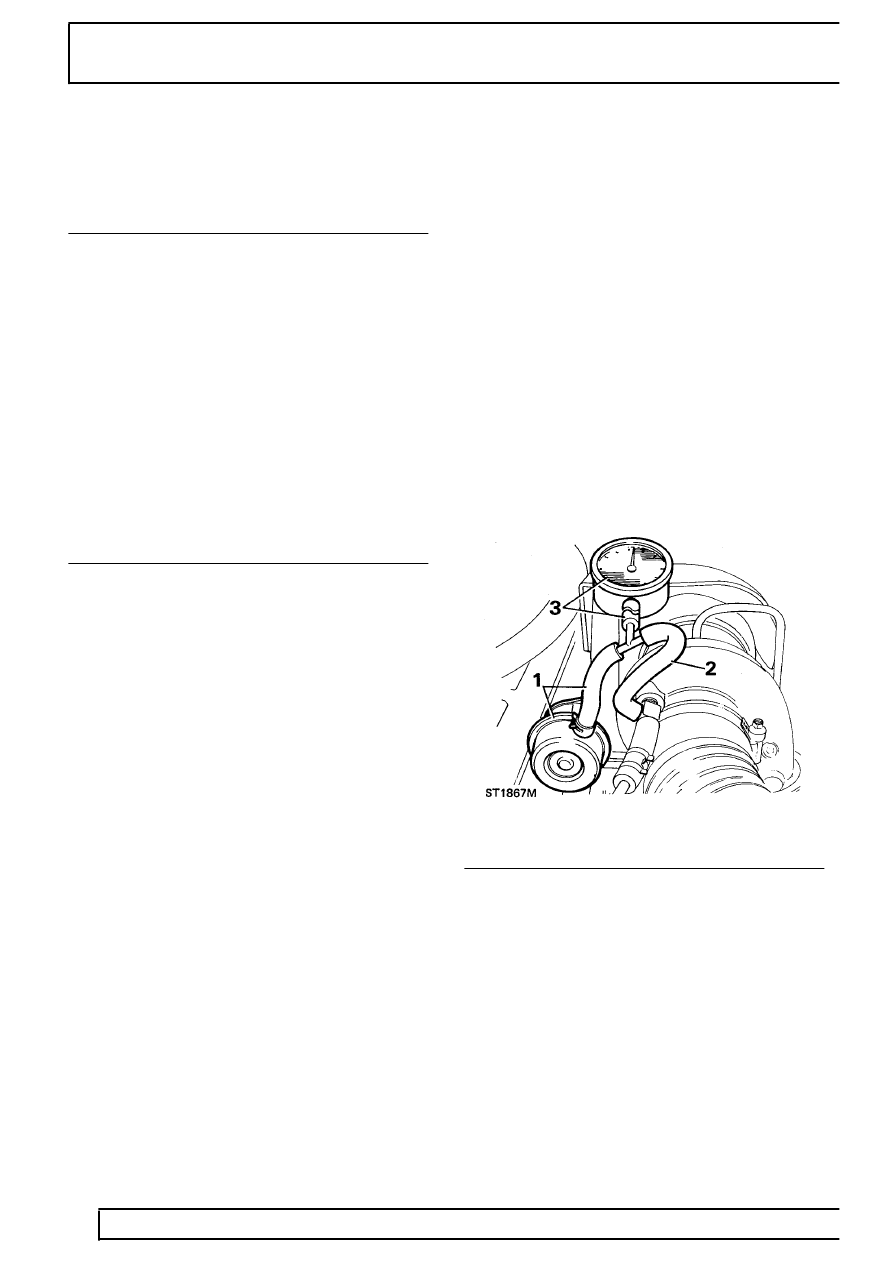
1. Disconnect, from turbocharger, hose to actuator.
Insert into a suitable "T" piece.
2. Connect a short length of suitable hose to
turbocharger and connect other end to "T" piece.
3. Connect a further length of hose to third leg of
the "T" piece and other end to a pressure gauge
capable of reading in excess of 61 cm Hg. The
pressure gauge hose must be capable of
reaching passenger compartment so that gauge
may be observed.
4. To check maximum boost pressure, drive
vehicle normally but in such a manner that full
throttle can be maintained whilst climbing a hill
with engine speed held steady between 2,500
and 3,000 rev/min.
Parts & tools for this job For Land Rover Range Rover
- PARTOil filterSearch: Land Rover Range Rover oil filter
- TOOLOil filter wrenchSearch: oil filter wrench
- FLUIDEngine oilSearch: Land Rover Range Rover engine oil
Links open Amazon search results in a new tab. As an Amazon Associate I earn from qualifying purchases.