
POWER STEERING SYSTEM - TEST
- Make
- Land Rover
- Model
- Range Rover Classic
- Section
- FAULT DIAGNOSIS › POWER STEERING SYSTEM - TEST
57
STEERING
2
FAULT DIAGNOSIS
POWER STEERING SYSTEM - TEST
NOTE: If steering lacks power assistance.
Check pressure of hydraulic pump before
fitting new components. Use fault
diagnosis chart to assist in tracing faults.
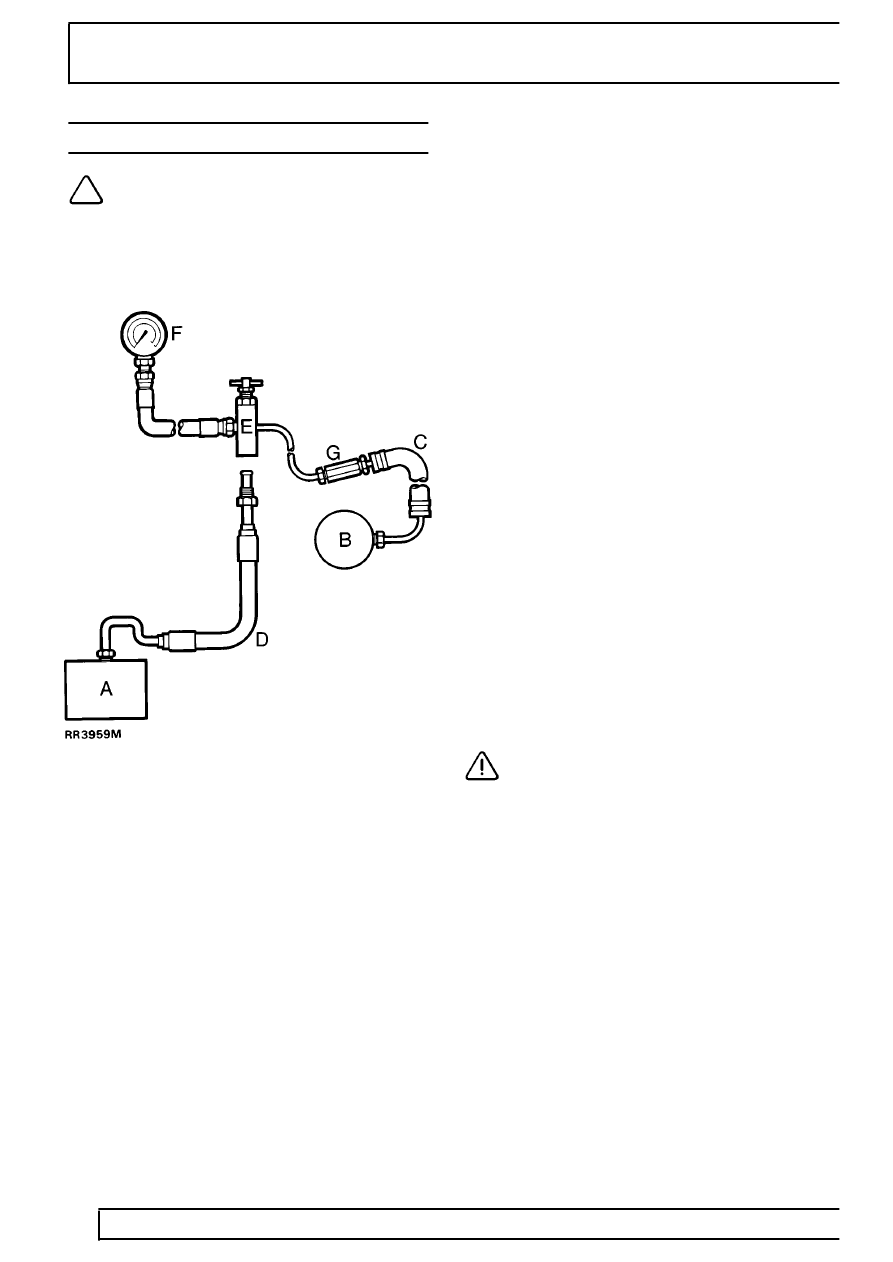
A.
Steering box.
B.
Steering pump.
C.
Existing hose, steering box to pump.
D.
Hose LRT-57-030.
E.
Test adaptor LRT-57-001.
F.
Pressure gauge LRT-57-005.
G.
Thread adaptor LRT-57-004.
H.
Thread adaptor LRT-57-022.
Procedure
1. A hydraulic pressure gauge and test adaptor is
used to test power steering system. This gauge
is able to measure 140 kgf/cm
2
. The maximum
power steering system pressure is 77 kgf/cm
2
.
2. Some fault conditions of hydraulic pump may
obtain pressures up to 105 kgf/cm
2
. Pressure on
gauge is same pressure being exerted upon
steering wheel. When testing, turn steering
wheel gradually while reading pressure gauge.
3. Check and maintain maximum fluid level of
reservoir.
4. Examine power steering units and connections
for leaks. All leaks must be rectified before
attempting to test the system.
5. Check steering pump drive belt tension.
See
ENGINE, Repair, Drive Belt
6. Assemble test equipment and fit to vehicle, as
shown in RR3959M.
7. Open tap of adaptor.
8. Bleed system, take care not to overload
pressure gauge.
9. With system in good condition, pressures should
be:
(A)
Steering wheel held on full lock and engine
running at 1,000 rev/min, 70 to 77 kgf/cm
2
.
(B)
Steering wheel held on full lock and engine
idling, 28 kgf/cm
2
.
Checks should be carried out on both full lock
positions.
CAUTION: Do not maintain this pressure
for more than 30 seconds in any one
minute to avoid overheating fluid and
possibly damaging seals.
10. Release steering wheel and with engine idling.
Pressure should read below 7 kgf/cm
2
.
11. If pressures differ to those given a fault exists.
12. To determine if fault is steering box or pump.
Close adaptor tap for a maximum five seconds.
13. If gauge does not register specified pressure,
pump is faulty.
14. Fit a new pump, bleed system and repeat test. If
low pressure or a substantial imbalance exists,
fault is in steering box valve and worm
assembly.
Parts & tools for this job For Land Rover Range Rover
- TOOLTie rod end toolSearch: tie rod end puller
- TOOLBall joint separatorSearch: ball joint separator
- FLUIDPower steering fluidSearch: Land Rover power steering fluid
Links open Amazon search results in a new tab. As an Amazon Associate I earn from qualifying purchases.