
Filler Neck and Check Valve
- Make
- Aston Martin
- Model
- DB9 Factory Workshop Manual
- Year
- Issue 2, 2005
- Section
- Fuel Tank and Lines › Filler Neck and Check Valve
Filler Neck and Check Valve
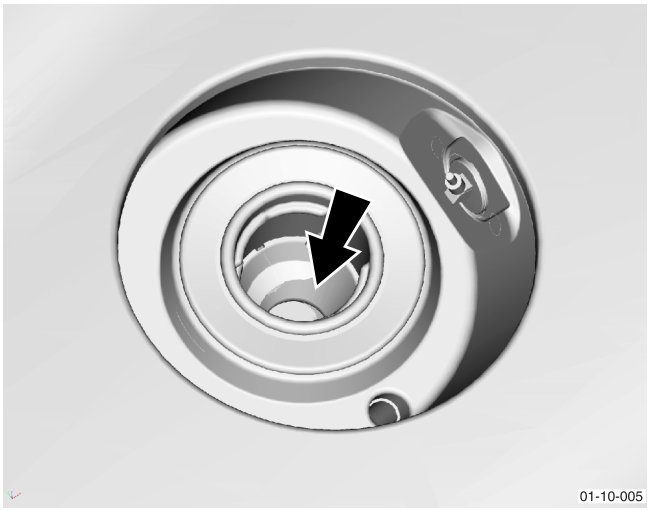
Incoming fuel passes through a check valve at the base of the filler neck. This valve is normally held closed by light spring pressure. The valve opens under the pressure of incoming fuel and closes again when fuel flow ceases. The check valve prevents surging of fuel in the filler neck.
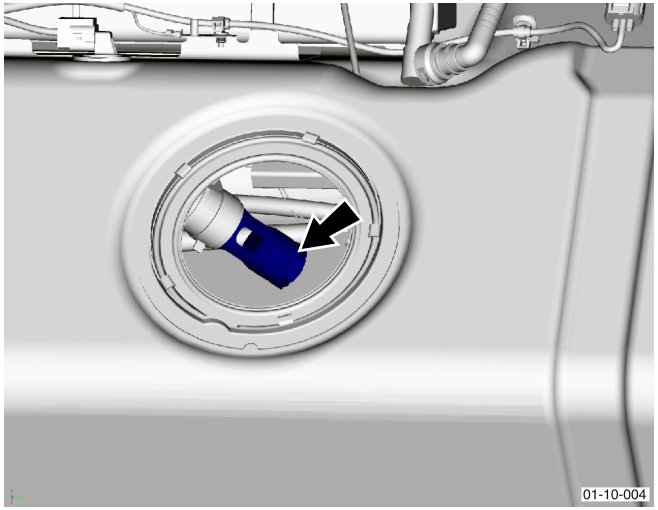
The filler neck also forms part of the on-board refuelling vapour recovery system. Incoming fuel forms a liquid seal in the filler neck. Thus any air displaced during fuel tank filling cannot escape via the filler neck.
Valves and Sensors
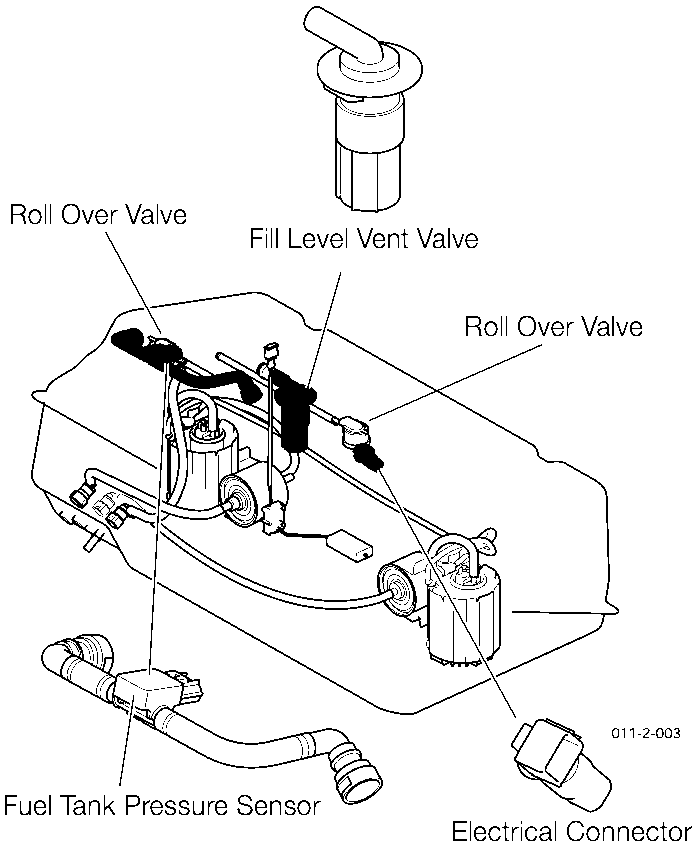
Fuel Limit Vent Valve (FLVV)
This valve contains a float which rises to cut off the path for displaced air when the fuel level rises towards maximum during fuel filling. This causes a rapid pressure build up in the tank which triggers the cut-off valve in the fuel delivery nozzle. This discourages overfilling of the fuel tank.
The FLVV also includes an over pressure relief valve set at about 2 psi to vent the tank if all other vents fail.
Roll Over Valves
The roll over valves purpose is to vent the highest point of the tank. If the tank is grossly overfilled (e.g. many clicks over the normal filler nozzle cut-off), the FLVV will suffer a hydraulic lock. The roll over vent valve allows venting of the tank at the highest possible level in this situation.
All three valves allow the tank to breath until it is inverted when they will close to prevent fuel spill. The fuel level vent valve controls the fuel height of the tank by creating a pressure spike inside the tank which shuts of the fill nozzle. If the vehicle is inverted in an accident, this valve will close to prevent leakage of liquid fuel.
Parts & tools for this job For 2005 Aston Martin DB9
- PARTEngine gasket setSearch: Aston Martin DB9 2005 engine gasket set
- TOOLTorque wrenchSearch: 3/8 inch torque wrench
- TOOLFeeler gauge setSearch: feeler gauge set
Links open Amazon search results in a new tab. As an Amazon Associate I earn from qualifying purchases.