
Engine management system - siemens (all except NAS) (Engine Sensors): Description and operation
- Make
- Land Rover
- Model
- Freelander System Description and Operation (UK)
- Section
- Description and operation › Engine Sensors
Engine Sensors
The EMS incorporates the following engine sensors: l A Camshaft Position (CMP) sensor. l A Crankshaft Position (CKP) sensor. l An Engine Coolant Temperature (ECT) sensor. l Three Heated Oxygen Sensors (HO2S). l An Intake Air Temperature/ Manifold Absolute Pressure (IAT/MAP) sensor. l Two knock sensors. l A Throttle Position (TP) sensor. l An accelerator pedal position sensor.
Camshaft Position (CMP) Sensor
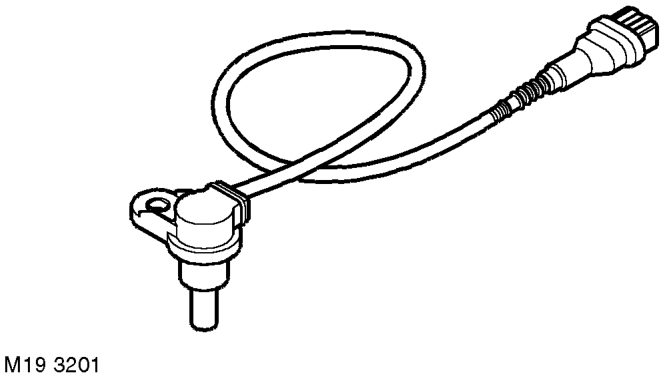
The CMP sensor provides a signal which enables the ECM to determine the position of the camshaft relative to the crankshaft. This allows the ECM to synchronise fuel injection for start and run conditions.
The CMP sensor is located on the camshaft cover of the LH cylinder bank, at the opposite end to the camshaft drive, in line with a 'half moon' reluctor on the exhaust camshaft. The reluctor comprises a single tooth which extends around 180° of the camshaft circumference.
The CMP sensor operates using the Hall effect principle. A permanent magnet inside the sensor applies a magnetic flux to a semiconductor, which receives a power supply from the main relay. The output voltage from the semiconductor is fed to the ECM. As the gap in the reluctor passes the sensor tip, the magnetic flux is interrupted, causing a fluctuation of the output voltage and producing a digital signal.
If the CMP sensor fails during engine running, the engine will run normally until turned off, but will not restart until the CMP sensor input is restored.
Parts & tools for this job For Land Rover Freelander
- TOOLOBD2 scannerSearch: OBD2 scanner
- TOOLDigital multimeterSearch: automotive digital multimeter
- TOOLBack-probe test leadsSearch: back probe test leads
Links open Amazon search results in a new tab. As an Amazon Associate I earn from qualifying purchases.