Control by increasing caliper fluid pressure
- Make
- Rover
- Model
- 600 Rover 600 Repair Manual - Volumes 1 and 2 - 2nd Edition
- Section
- Operation › Control by increasing caliper fluid pressure
Control by increasing caliper fluid pressure
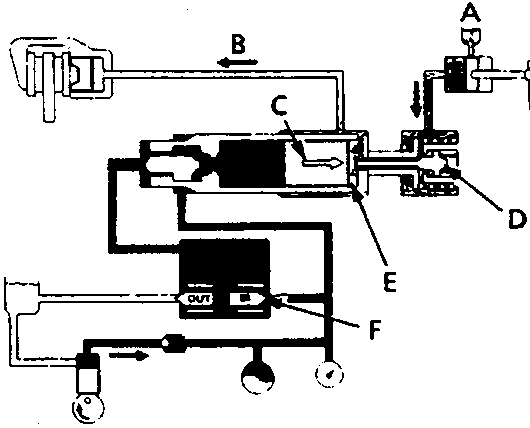
- A Piston slides
- B Pressure reduces
- C Chamber A
- D Reservoir
- E Pressure reduction chamber
- F Cut valve – closed
When the ABS control unit senses that the caliper fluid pressure has reduced, and the wheel speed is restored, it signals the solenoid inlet valve to open and the solenoid outlet valve to close.
As a result, the high pressure brake fluid is transmitted to the back – pressure chamber, and the piston is pushed towards the pressure reduction chamber, increasing caliper fluid pressure and thereby regaining the braking force.
When the fluid pressure on the master cylinder side is low, the cut valve is slightly opened as the piston moves, and the caliper fluid pressure is transmitted to the master cylinder. The 'kickback' is felt on the brake pedal this time.
When the force depressing the brake pedal is relieved while the ABS is functioning, the cut valve seat is opened and the pressure in the pressure reductions chamber is returned to the master cylinder side. As a result, the caliper fluid pressure is relieved.
When high – pressure reduces
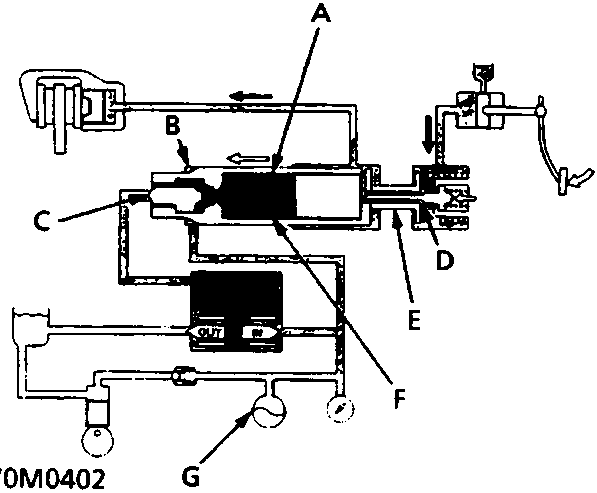
- A Hydraulically locked back pressure chamber
- B Chamber A
- C Valve closed
- D Cut valve – opens
- E Cut valve seat moves
- F Sleeve moves
- G Pressure drops
The ABS control unit monitors the pressure in the high – pressure passage by means of the pressure switch signals. The ABS control unit turns the ABS indicator light on, and stops the ABS when it detects an excessive drop in pressure in the high – pressure passage.
When the pressure reduction is due to leakage from the passage, for example, the pressure in chamber A reduces also, and the cut valve seat and sleeve return towards chamber A.
As a result, the valve at the sleeve end closes, which hydraulically locks the back – pressure chamber and blocks the piston movement. Because the cut valve opens as the cut valve seat moves, this connects the brake fluid passage between the master cylinder and caliper normal brake operation.
Parts & tools for this job For Rover 600
- PARTBrake padsSearch: Rover 600 brake pads
- TOOLCaliper piston rewind toolSearch: brake caliper piston rewind tool
- FLUIDBrake fluidSearch: brake fluid
Links open Amazon search results in a new tab. As an Amazon Associate I earn from qualifying purchases.