
Manifold absolute pressure sensor
- Make
- Rover
- Model
- Coupé, Cabriolet & Tourer 200/400 Coupé, Cabriolet & Tourer Workshop Manual Supplement
- Section
- Description and operation › Manifold absolute pressure sensor
Manifold absolute pressure sensor
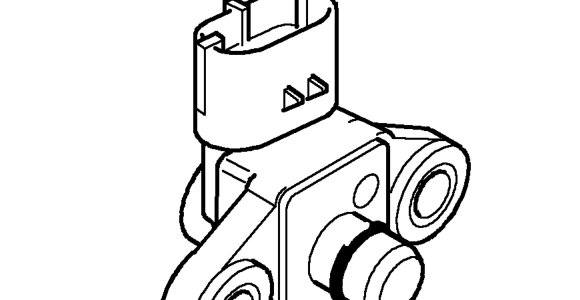
The manifold absolute pressure (MAP) sensor is located within the ECM except on VVC models, where it is mounted directly onto the manifold. It detects manifold pressure via a hose connected to the inlet manifold. The MAP sensor converts pressure variations into graduated electrical signals which can be read by the ECM. Increases and decreases in the manifold pressure provide the ECM with an accurate representation of the load being placed on the engine allowing the ECM to adjust the quantity of fuel being injected and the ignition timing to achieve optimum fuelling of the engine.
IGNITION TIMING COMPENSATION
Engine coolant temperature sensor

The engine coolant temperature (ECT) sensor is a ’thermistor’ (a temperature dependent resistor), i.e. the voltage output varies in proportion to temperature. The ECT sensor is located on top of the coolant outlet elbow. The ECM constantly monitors this signal and uses the information to provide optimum driveability and emissions by advancing or retarding the ignition timing.
Idle speed control
With the throttle pedal released and the engine at idle, the ECM uses the fast response of the engine to ignition timing to maintain idle stabilisation.
When loads are placed on or removed from the engine, the ECM responds to changes in engine speed and in conjunction with adjusting the idle air control (IAC) valve, advances or retards the ignition timing to maintain a specified idle speed. When load is removed from the engine the IAC valve returns to its original position and the ignition timing returns to the idle setting.
NOTE: Due to the sensitivity of this system the ignition timing will be constantly changing at idle speed.
Parts & tools for this job For Rover Coupé, Cabriolet & Tourer
- TOOLOBD2 scannerSearch: OBD2 scanner
- TOOLDigital multimeterSearch: automotive digital multimeter
- TOOLBack-probe test leadsSearch: back probe test leads
Links open Amazon search results in a new tab. As an Amazon Associate I earn from qualifying purchases.