
Self-adaptivity and Starting
- Make
- Fiat
- Model
- Bravo /Brava (182) Factory Service Manual
- Year
- 1995–2001
- Section
- Fuel system (98 range, 1581 16v) › Self-adaptivity and Starting
Self-adaptivity and Starting
The control unit has a strength self-adaptivity function, which memorizes any deviations between basic mapping and corrections imposed by the Lambda probe which may arise peristently during operation. These deviations (due to ageing of the components of the system and engine) are memorized permanently, allowing the operation of the system to adapt to the gradual alterations of the engine and components in relation to the characteristics when new. To delete the corrections memorized, use the appropriate function on the diagnostic equipment. The corrections are NOT lost even if the battery or control unit are disconnected.
The strategy is disabled during the period when the fuel vapour cut-off solenoid is open. If the control unit is replaced, it is advisable to run the engine at idle speed for a few minutes (hot engine) to allow the control unit to re-memorize the corrections. Corrections at speeds higher than idle speed are memorized during normal driving conditions.
The control unit also has a self-adaptivity function which corrects the opening of the idle speed actuator at idle speed on the basis of variations due to leaks from the throttle body or natural ageing of the engine. This specific correction is lost if the battery or control unit are disconnected.
Starting and post-starting
During starting, it is not possible to recognize instantaneously the engine timing, and so it is not possible to effect phased fuel injection for the first injection of each cylinder.
During the first few engine revolutions, a first simultaneous injection (full group) is effected because significant fluctuations in engine speed do not permit correct calculation of the injection timing; only after does injection become phased.
The "basic" injection time is increased by a multiplicative coefficient for as long as the engine is driven by the starter motor.
After starting, the coefficient is gradually reduced until it disappears within a particular time period which is all the longer the lower the engine temperature.
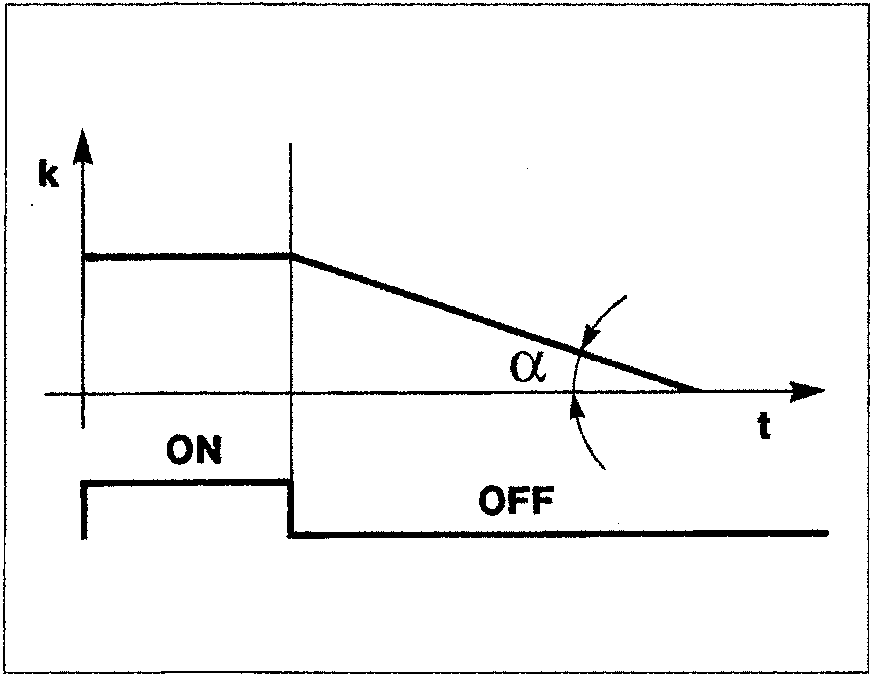
k : enrichment coefficient
t : time
α : decrease in relation to engine temperature
ON: engine driven (crank)
OFF: engine started (run)
Parts & tools for this job For 1995 Fiat Bravo
- PARTFuel filterSearch: Fiat Bravo 1995 fuel filter
- TOOLFuel pressure test kitSearch: fuel pressure test kit
- TOOLFuel line disconnect toolSearch: fuel line disconnect tool
Links open Amazon search results in a new tab. As an Amazon Associate I earn from qualifying purchases.