
Wipers and washers (Rear wiper): Description and operation
- Make
- Land Rover
- Model
- Discovery II (UK)
- Section
- Description and operation › Rear wiper
The dc motor contains two permanent magnets, three brushes and a park switch. The smaller third brush is utilised for high-speed operation. Attached to the brush pack are 3 capacitors, which minimise radio interference during wiper operation. A thermal trip switch attached to the brush plate prevents thermal overload of the motor.
The motor incorporates a worm drive gear unit to transfer the rotary motion into a linear motion of the wiper linkage assembly.
The front wiper motor receives battery voltage from fuse 19 of the passenger compartment fuse box. For low-speed operation, including intermittent variable delay operation, the battery voltage to move the wiper motor from the park position passes through the front wiper relay. When the park switch moves to the closed when operating position, fuse 19 of the passenger compartment fuse box provides battery voltage directly to the wiper motor.
For high-speed operation, including flick wipe, fuse 19 in the passenger compartment fuse box provides the battery voltage to move the wiper motor from the park position through the front wash/ wipe switch to the front wiper motor. To achieve high-speed wiper operation, power is supplied to a third brush that provides a closer distance between the motor poles. Because the poles of the motor are closer together, the motor operates faster.
Rear wiper
The rear wiper is driven directly from an electric motor located inside the tail door. The motor is mounted inside the tail door with two bolts, lock washers and washers. The motor mounting brackets have rubber inserts to prevent motor operating noise being transferred to the door structure. The motor spindle is fitted with a seal and protrudes through a hole in the tail door outer skin panel. The motor spindle is secured to the tail door with a washer and nut.
The motor output spindle has a taper splined shaft which allows for the attachment of the wiper arm which is secured with a nut. The wiper arm attachment to the splined shaft has a pivot to which the remainder of the arm is attached. The two parts of the arm are connected by a spring which controls the pressure of the blade on the window to a predetermined amount.
The wiper blade is attached to the wiper arms with a clip which allows the blade to pivot. The wiper blade comprises of a number of levers and yokes to which the rubber wiper is attached. The levers and yokes ensure that the pressure applied by the arm spring is evenly distributed along the full length of the blade. The rubber wiper is held in the yokes by a pair of stainless steel strips which also contribute to the even distribution of spring pressure along the blade.
Rear wiper switch
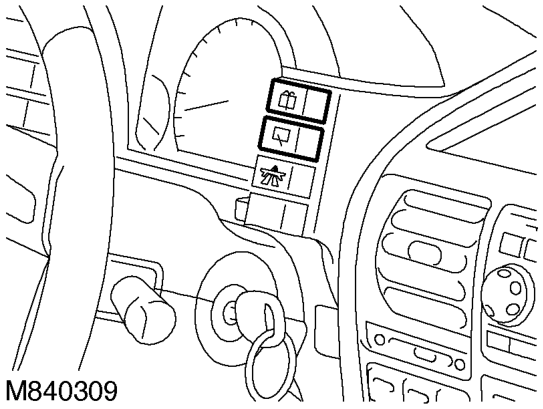
The rear wiper switch is a latching pushbutton switch and is located on the right hand side of the instrument pack.
Activating the rear wiper switch provides an earth signal to the BCU. The BCU signals the IDM to energise the rear wiper relay, which provides battery voltage to the rear wiper motor.
Parts & tools for this job For Land Rover Discovery
- PARTWiper bladesSearch: Land Rover Discovery wiper blades
- PARTWasher pumpSearch: Land Rover Discovery washer pump
Links open Amazon search results in a new tab. As an Amazon Associate I earn from qualifying purchases.