
Passive remobilisation exciter coil (Alarm system and horn)
- Make
- Land Rover
- Model
- Discovery II (UK)
- Section
- Description and operation › Passive remobilisation exciter coil
Passive remobilisation exciter coil
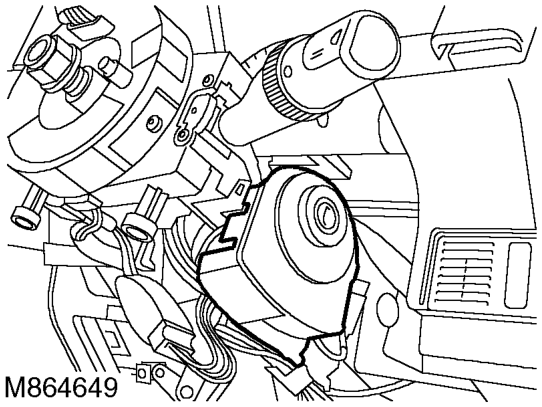
The passive remobilisation exciter coil consists of a coil around the steering column lock. The coil energises to create a magnetic field when the ignition is switched to position II.
This coil activates the handset initiating the mobilisation of the vehicle.
Input/Output The input to the passive remobilisation exciter coil from the BCU is a 12 volts 125 kHz sinewave. The passive remobilisation exciter coil also receives an ignition controlled power supply via fuse 20 (15 amperes) located in the engine compartment fuse box. On receiving these signals, a magnetic field is generated which activates the handset to produce a remobilisation signal. This remobilisation signal is transmitted to the remote receiver and onto the BCU to allow the engine to start.
Parts & tools for this job For Land Rover Discovery
- PARTReplacement bulbsSearch: Land Rover Discovery bulbs
- TOOLDigital multimeterSearch: automotive digital multimeter
Links open Amazon search results in a new tab. As an Amazon Associate I earn from qualifying purchases.