
Clutch - Td5 (Description): Description and operation (page 4 of 4)
- Make
- Land Rover
- Model
- Discovery II (UK)
- Section
- Description and operation
The pressure plate assembly comprises a pressure plate, cover and diaphragm and is mounted on and rotates with the dual mass flywheel.
The pressure plate is forged from cast iron and machined to provide a smooth surface for the drive plate to engage on. Three lugs on the outer diameter of the pressure plate connect it via three leaf spring to the cover. The leaf springs have three tempered steel leaves which assist in pulling the pressure plate away from the drive plate when the clutch pedal is depressed.
The cover is made from pressed steel and houses all pressure plate components. Shouldered rivets support the diaphragm inside the cover. The rivets heads are chamfered to allow the diaphragm to pivot when pressure is applied to it by the release bearing. Three holes in the cover locate on the dowels on the flywheel and six further holes provide for the attachment of the cover to the flywheel with six nuts. Larger holes in the cover provide ventilation for the drive plate and pressure plate and flywheel contact surfaces.
The diaphragm comprises a cast ring with eighteen fingers. The diaphragm is attached to the cover with nine shouldered rivets. The inner head of each rivet is chamfered to allow the diaphragm to pivot when the clutch is depressed or released. When pressure is applied to the fingers of the diaphragm by the release bearing, the diaphragm pivots on the rivets and moves away from the pressure plate, releasing the force applied to the pressure plate and allowing the drive plate to slip between the pressure plate and the flywheel.
Drive plate
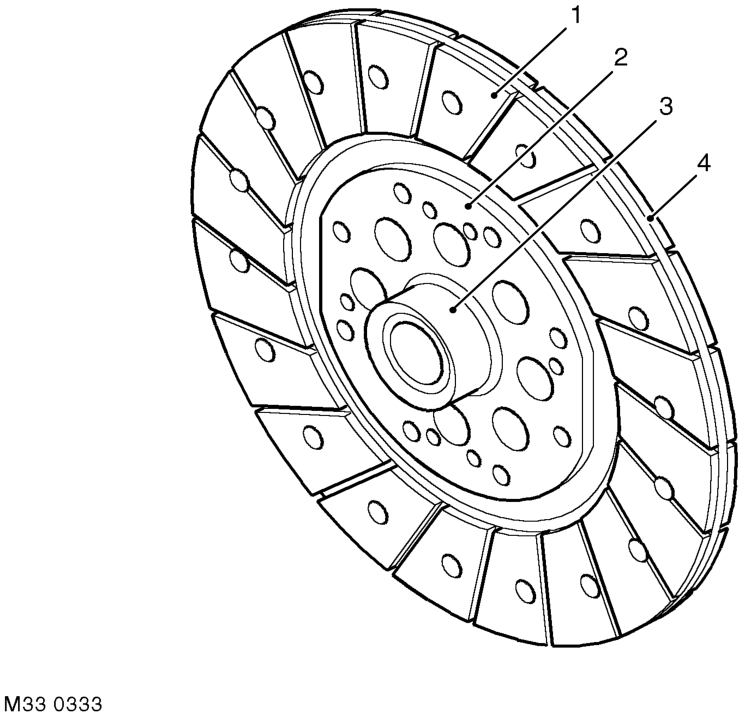
1 Friction material 2 Inner plate 3 Hub 4 Spring steel plate
The drive plate is of the rigid centre type and is sandwiched between the flywheel and the pressure plate. The drive plate has a splined hub which engages with the splines on the primary drive shaft from the gearbox. The hub is attached to an inner plate which is pressed onto the hub. A spring steel plate is riveted to the inner plate with eight rivets and provides the attachment surface for the drive plate friction material. The spring steel plate allows some axial compliance and contributes to smooth clutch operation. The friction material comprises two 267 mm (10.5 in.) discs which are secured with rivets to each side of the spring steel plate. The rivets are installed through recessed holes in the disc and emerge in recessed holes in the opposite disc.
Parts & tools for this job For Land Rover Discovery
- PARTClutch kitSearch: Land Rover Discovery clutch kit
- TOOLClutch alignment toolSearch: clutch alignment tool
- FLUIDGear oilSearch: Land Rover Discovery manual gearbox oil
Links open Amazon search results in a new tab. As an Amazon Associate I earn from qualifying purchases.