
Exhaust gas recirculation (Emission control - Td5)
- Make
- Land Rover
- Model
- Discovery II (UK)
- Section
- Description and operation › Exhaust gas recirculation
Exhaust gas recirculation
The exhaust gas recirculation (EGR) valve permits a controlled amount of exhaust gas to combine with the fresh air entering the engine. The exhaust gas reduces the combustion temperature by delaying the fuel burning rate, which assists in reducing the quantity of oxides of nitrogen.
On EU3 models, an EGR cooler is employed to further reduce the combustion temperature. By passing the exhaust gas through a bundle of pipes flooded by coolant, the density of the exhaust gas going into the engine is increased. This process further reduces the amount of oxygen, which in turn, further reduces the amount of NO2 in the exhaust.
Recirculating too much exhaust gas can result in higher emissions of soot, HC and CO due to insufficient air. The recirculated exhaust gas must be limited so that there is sufficient oxygen available for combustion of the injected fuel in the combustion chamber, to do this the Engine Control Module (ECM) is used to control the precise quantity of exhaust gas to be recirculated in accordance with the prevailing operating conditions. Influencing factors include: l the mass of air flow detected by the mass air flow sensor. ENGINE MANAGEMENT SYSTEM - Td5, DESCRIPTION AND OPERATION, Description. l the ambient air pressure, determined by the ambient air pressure sensor which is used to initiate adjustments to reduce the amount of smoke produced at high altitudes. ENGINE MANAGEMENT SYSTEM - Td5, DESCRIPTION AND OPERATION, Description.
Other factors which are taken into consideration by the engine management system for determining the optimum operating condition include: l Manifold inlet air temperature l Coolant temperature l Engine speed l Fuel delivered
The main components of the EGR system are as follows.
EGR Modulator
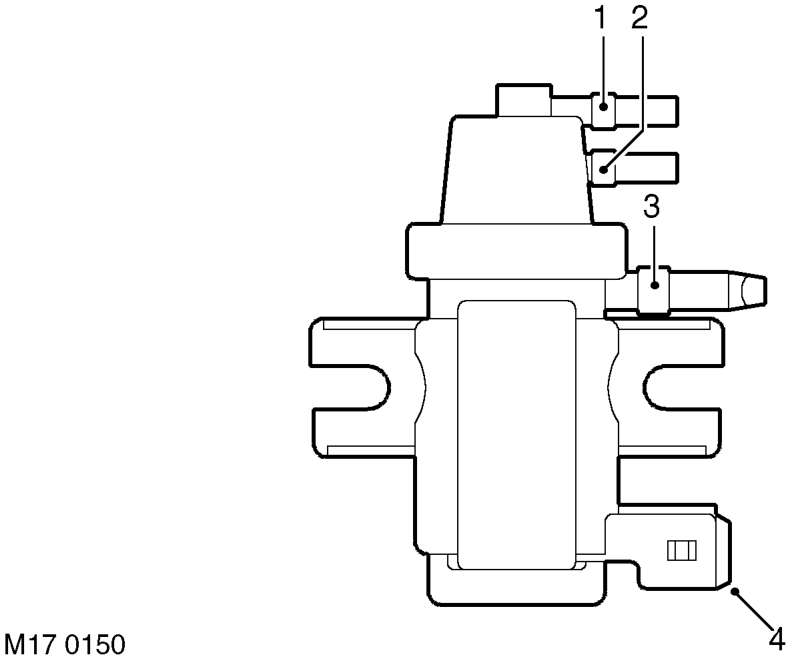
1 Port to vacuum source (white band) 2 Port to EGR valve (blue band) 3 Port to atmosphere via in-line filter (green band)
4 Harness connector (black)
Parts & tools for this job For Land Rover Discovery
- PARTExhaust gasketSearch: Land Rover Discovery exhaust gasket
- TOOLPenetrating oilSearch: penetrating oil
- TOOLOBD2 scannerSearch: OBD2 scanner
Links open Amazon search results in a new tab. As an Amazon Associate I earn from qualifying purchases.