
Diagnostic and Control Unit (DCU) (Restraint systems)
- Make
- Land Rover
- Model
- Discovery II (UK)
- Section
- Description and operation › Diagnostic and Control Unit (DCU)
Diagnostic and Control Unit (DCU)
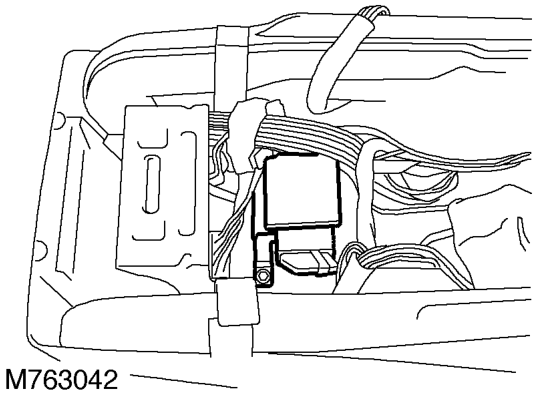
The SRS DCU is an electronic single point crash sensor. It is capable of sensing if a crash has taken place. If all the relevant parameters are met, then the DCU deploys the airbag(s) and seat belt pretensioners.
The DCU is bolted to the transmission tunnel beneath the centre console in the area of the handbrake.
The DCU performs the following functions: l Internal self test, system monitoring and fault detection. l SRS warning lamp operation. l System deployment.
Self test, system monitoring and fault detection The DCU performs a self-test during start-up and then continually during operation of the system. The following components are tested: l The decelerometer. l The electromechanical safing sensor. l The microprocessor. l The continuity of squib ignition circuits. l The SRS warning lamp.
If the DCU detects a fault, it stores the fault code in memory. Diagnose the DCU with TestBook. The DCU cannot be serviced. It must be replaced if it is faulty.
SRS warning lamp operation The DCU controls the SRS warning lamp contained in the instrument cluster.
System deployment The DCU determines when the system deploys based on inputs from both the decelerometer and the electromechanical safing sensor. Both are located within the DCU. Neither are serviceable.
The electromechanical safing sensor uses a magnet and ball bearing system to provide a mechanical confirmation of vehicle deceleration. The ball bearing is held in place by the magnet. The strength of the magnet is calibrated such that the force required for the ball bearing to move away from the magnet will only occur if the vehicle decelerates suddenly, as in an accident.
The SRS deploys only if both the decelerometer reading and the safing sensor operation occur at the same time.
Parts & tools for this job For Land Rover Discovery
- TOOLOBD2 scannerSearch: OBD2 scanner
- TOOLDigital multimeterSearch: automotive digital multimeter
- TOOLBack-probe test leadsSearch: back probe test leads
Links open Amazon search results in a new tab. As an Amazon Associate I earn from qualifying purchases.