
PAS pump - diesel (Steering)
- Make
- Land Rover
- Model
- Discovery II (UK)
- Section
- Description and operation › PAS pump - diesel
The PAS pump is a roller vane type and has an internal pressure regulator and flow control valve. The roller vanes can move in slots in the pumps rotor and are moved outwards by centrifugal force as the pump rotates. The pump rotor rotates in the pump housing, the internal shape of the housing forms a 'cam' shape. Due to the 'cam' shape the volume of the housing decreases between the inlet and outlet ports.
As the pump rotor rotates towards the pump inlet the volume between the roller vanes and the pump housing increases, this action causes a depression in the chamber between the pump roller vanes and the housing. As the rotation continues the chamber is opened to the pump inlet, and the depression in the chamber causes fluid to be drawn in. The roller vanes continue past the inlet port, closing off the inlet port and trapping the fluid in the chamber between the rollers and the pump housing.
The internal 'cam' shape of the pump housing causes the rollers to move closer together as the pump rotor rotates towards the outlet port. The reduced volume of the chamber between the roller vanes causes the fluid to become pressurised. When the chamber is opened to the outlet port of the pump the fluid escapes at high pressure. The roller vanes continue turning and go past the outlet port, closing off the chamber between the two roller vanes.
As rotation continues the inlet sequence begins again. The inlet and pressurisation/outlet sequences continue as the pump rotates, and is repeated between each two roller vanes. The pump is a positive displacement type and the potential pump output increases with engine (drive pulley) speed. The pressure relief and flow control valve regulates flow/pressure by diverting fluid back to the pump inlet through internal recirculation passages in the pump body.
PAS pump - diesel
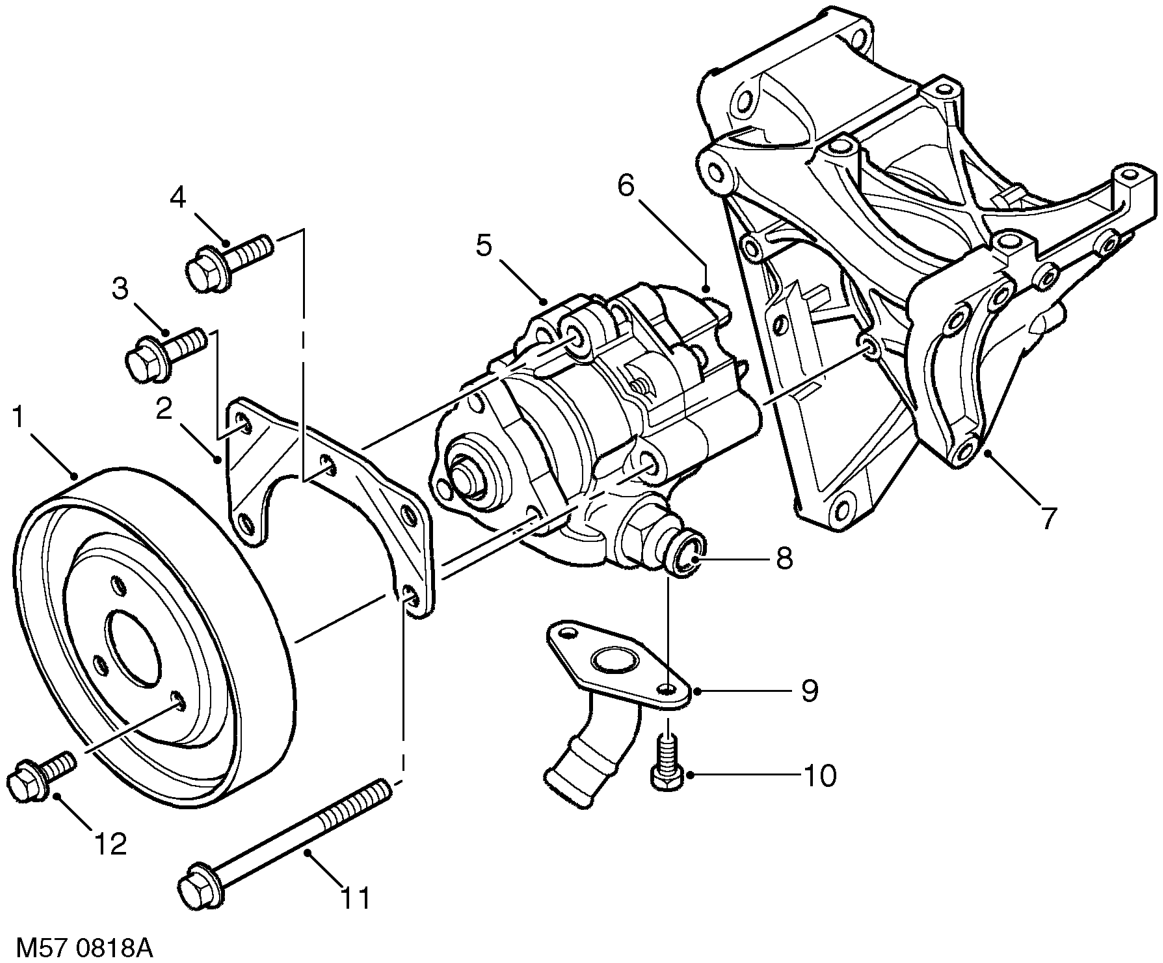
1 Drive pulley 2 Mounting bracket 3 Bolt 2 off 4 Bolt 5 PAS pump 6 Coupling
7 Auxiliary housing 8 Outlet 9 Inlet adaptor pipe and seal 10 Bolt 2 off 11 Bolt 2 off 12 Bolt 3 off
Parts & tools for this job For Land Rover Discovery
- PARTGlow plugsSearch: Land Rover Discovery glow plugs
- TOOLGlow plug socketSearch: glow plug socket
- TOOLDiesel compression testerSearch: diesel compression tester
Links open Amazon search results in a new tab. As an Amazon Associate I earn from qualifying purchases.