
Steering (Steering box): Description and operation
- Make
- Land Rover
- Model
- Discovery II (UK)
- Section
- Description and operation › Steering box
Steering box
The steering box is located behind the first cross member of the chassis and is secured to the chassis rail with four bolts. The steering box is of the worm and roller type and has a rotary control valve. The steering box is connected to the steering knuckles of the front road wheels by the drop arm, drag link and track rod. The steering box is lubricated by the hydraulic fluid in the housing. The input shaft is attached to the steering wheel via the intermediate shaft and steering column. The drop arm is secured to the output shaft with a nut and tab washer. A ball joint allows movement between drop arm and drag link, the ball joint is secured with a locknut. The steering box requries approximately 3.5 turns from lock to lock.
As a maintenance aid, an alignment bolt can be used to lock the drop arm at the steering box centre position. The bolt fits in a groove in the rear face of the drop arm and screws in to a threaded hole on the bottom of the steering box housing.
Cross section through steering box
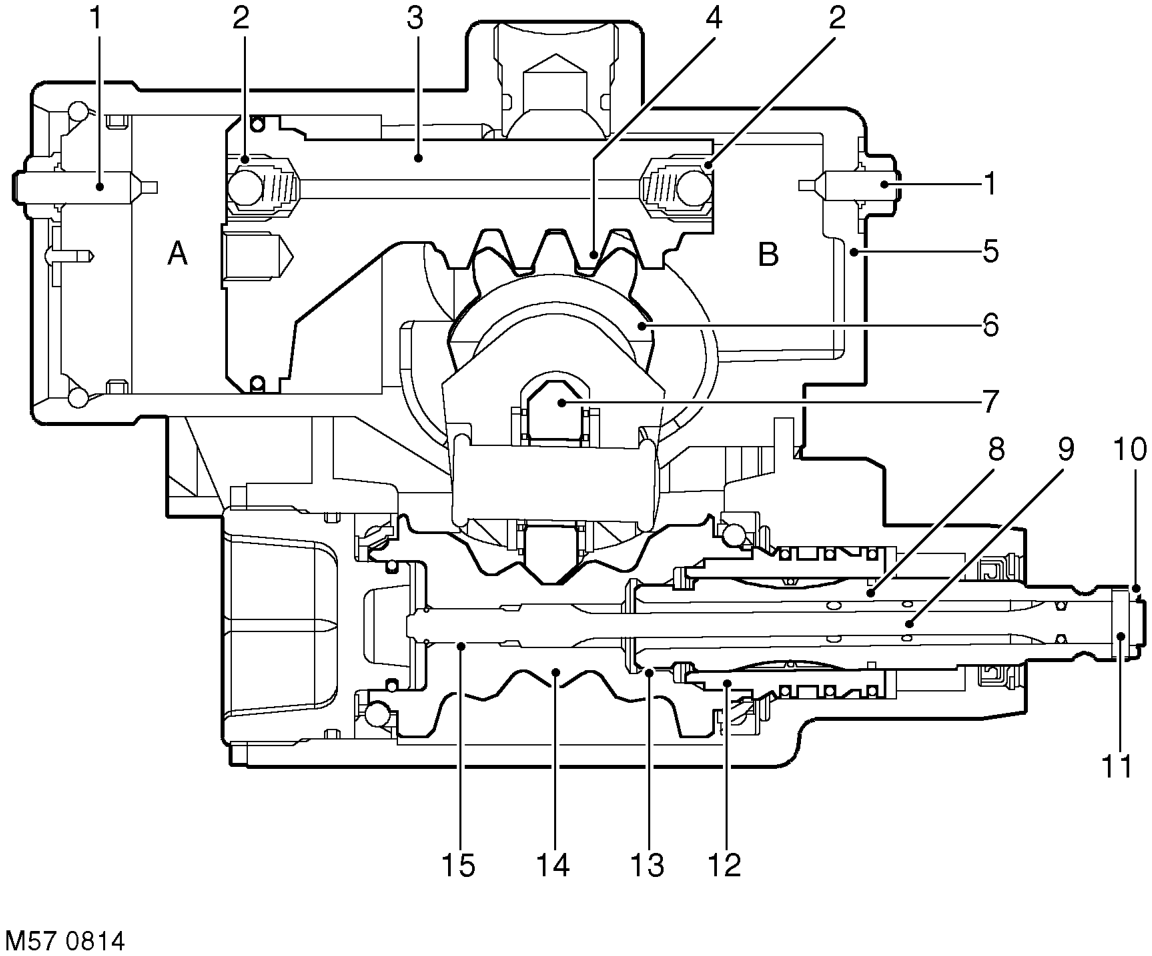
1 Relief valve stop 2 off 2 Relief valve 2 off 3 Piston 4 Rack 5 Housing 6 Output shaft 7 Roller 8 Valve rotor
9 Torsion bar 10 Input shaft 11 Pin 12 Valve sleeve 13 Course spline 14 Worm gear 15 Spline (worm gear to torsion bar)
Parts & tools for this job For Land Rover Discovery
- TOOLTie rod end toolSearch: tie rod end puller
- TOOLBall joint separatorSearch: ball joint separator
- FLUIDPower steering fluidSearch: Land Rover power steering fluid
Links open Amazon search results in a new tab. As an Amazon Associate I earn from qualifying purchases.