
Driving aids (Sensors): Description and operation
- Make
- Land Rover
- Model
- Discovery II (UK)
- Section
- Description and operation › Sensors
Sensors
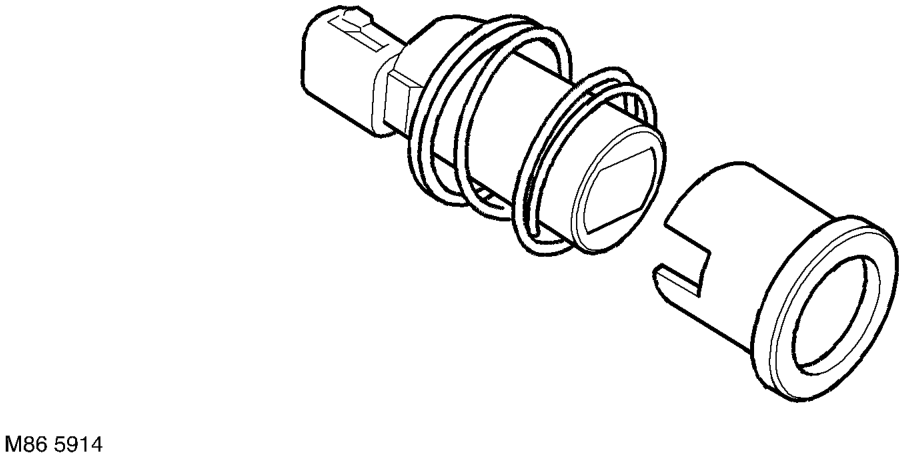
Four sensors are positioned in the rear bumper. Each sensor comprises an outer housing with an angled rubber trim which differs between the inner and outer sensors and the sensor body. The outer housing has a slot which engages with a pin on the sensor body and is locked by rotating the sensor. A coil spring around the sensor is compressed when the sensor is installed in the bumper and maintains the sensor housing engaged on the pin. The sensor housing has a raised lip at the top which locates in a corresponding groove in the bumper mounting hole and sets the correct orientation for the sensor body.
Each sensor has a three pin connector which connects into a common harness linking all four sensors. This harness is connected to the main vehicle body harness. The three pins are for sensor negative and positive feeds and a signal line.
Each sensor comprises a plastic housing which contains a piezoelectric disc. The disc resonates at a frequency of 38.4kHz, producing an ultrasonic signal output. The disc also receives the reflected echo signal.
The PDC ECU controls the operating mode of each sensor by output of a digital signal on the signal line. Each sensor has two modes of operation; combined transmitter and receiver mode or receiver mode only.
Parts & tools for this job For Land Rover Discovery
- TOOLOBD2 scannerSearch: OBD2 scanner
- TOOLDigital multimeterSearch: automotive digital multimeter
- TOOLBack-probe test leadsSearch: back probe test leads
Links open Amazon search results in a new tab. As an Amazon Associate I earn from qualifying purchases.