
Wipers and washers (Washers): Description and operation (page 2 of 4)
- Make
- Land Rover
- Model
- Discovery II (UK)
- Section
- Description and operation
Front screen washer jets Two washer jets for the front windscreen are fitted to the top surface of the bonnet and held in place with plastic clips. Each washer jet is connected via a hose to an in-line valve. The in-line valve prevents the washer fluid draining back to the reservoir and ensures that the washers operate immediately the washer pump is operated. From each in-line valve the washers are connected via a short hose to a 'T' connector. From the 'T' connector a single hose connects to the outlet of the front washer pump. Each jet has two jets which can be adjusted to allow full fluid coverage of the windscreen.
Rear screen washer jet A single washer jet for the tail door window is fitted to the rear wiper blade. The jet has four spray orifices which direct washer fluid to either side and along the length of the wiper blade. The jet is connected by a hose from the wiper blade, through a sealing grommet in the tail door and connects with the rear washer hose from the rear washer pump. A nonreturn valve is used to join the feed hose from the pump to the washer jet hose. The non-return valve prevents fluid draining to the reservoir and ensures that the washer operates immediately the washer pump is operated. The hose from the pump to the tail door is located inside the main harness.
Headlamp power washer jets When fitted, a powerwash jet for each headlamp is located in a housing on the top surface of the front bumper. The jets are fed with fluid at high pressure from the powerwash pump. A large diameter hose connects each jet to the pump. Each connection is secured with a metal clip to secure the hose due to the high pressure from the pump. Each jet directs the high pressure fluid in a wide spray onto the headlamp lens.
Rear washer switch
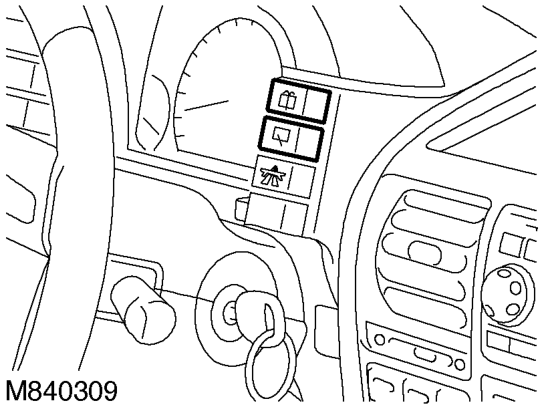
The rear washer switch is a non-latching pushbutton switch and is located on the RH side of the instrument pack.
Activating the rear washer switch provides battery voltage from fuse 30 in the passenger compartment fusebox to the rear washer pump.
Parts & tools for this job For Land Rover Discovery
- PARTWiper bladesSearch: Land Rover Discovery wiper blades
- PARTWasher pumpSearch: Land Rover Discovery washer pump
Links open Amazon search results in a new tab. As an Amazon Associate I earn from qualifying purchases.