
Master cylinder assembly (Brakes)
- Make
- Land Rover
- Model
- Discovery II (UK)
- Section
- Description and operation › Master cylinder assembly
Master cylinder assembly
Section through master cylinder assembly
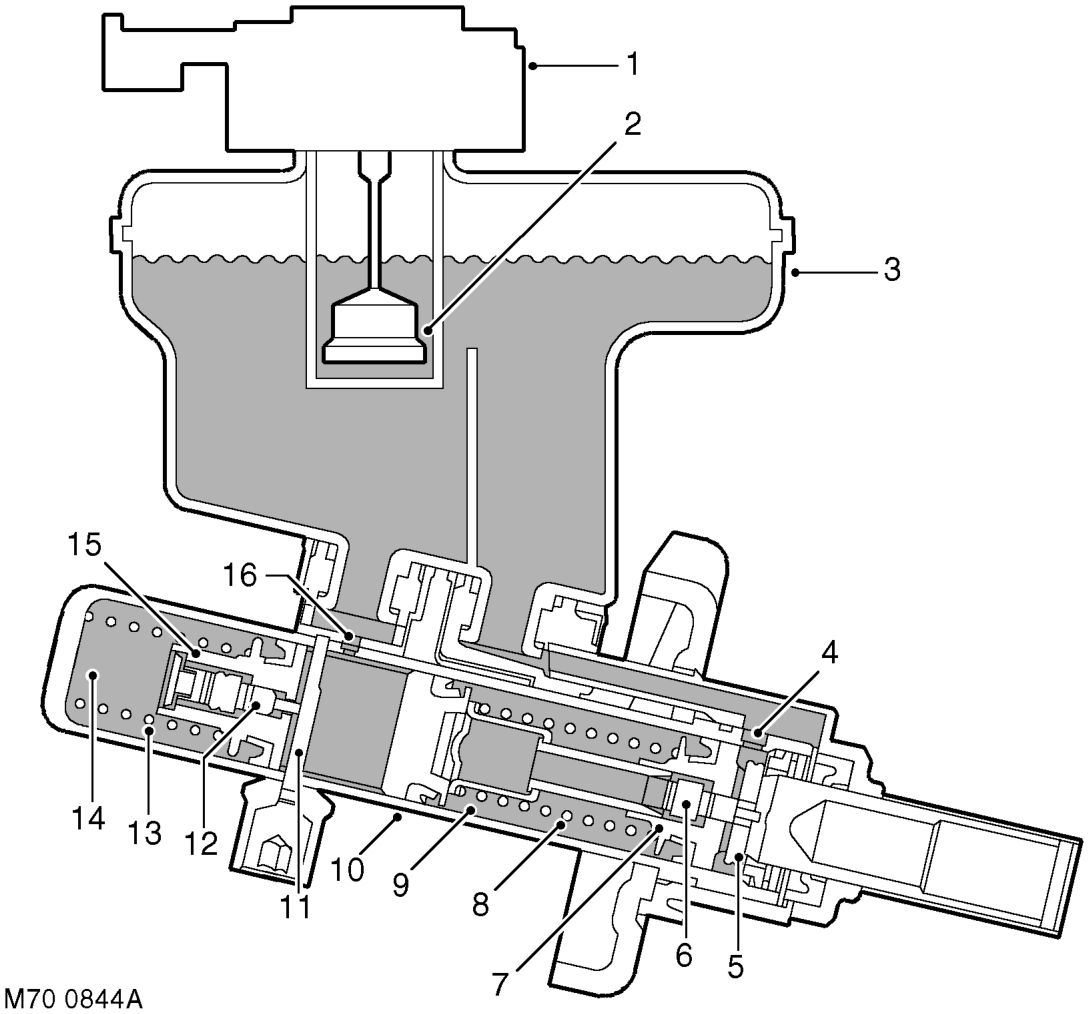
1 Reservoir filler cap 2 Switch float 3 Brake fluid reservoir 4 Primary feed hole 5 Valve pin 6 Primary centre valve 7 Primary piston 8 Primary spring
9 Pressure chamber 10 Cylinder 11 Valve pin 12 Secondary centre valve 13 Secondary spring 14 Pressure chamber 15 Secondary piston 16 Secondary feed hole
The master cylinder assembly produces hydraulic pressure to operate the brakes when the brake pedal is pressed.
The assembly is attached to the front of the brake servo assembly, and comprises a cylinder containing two pistons in tandem. The rear piston produces pressure for the primary circuit and the front piston produces pressure for the secondary circuit. A brake fluid reservoir is installed on top of the cylinder. The reservoir is internally divided to provide an independent supply of fluid to each brake circuit, and so prevent a single fluid leak from disabling both primary and secondary brake circuits. Should a failure occur in one circuit, the remaining circuit will still operate effectively, although brake pedal travel and vehicle braking distances will increase. If the fluid level in the reservoir is too low, a float operated switch in the reservoir filler cap connects an earth to the instrument pack, which illuminates the brake warning lamp.
Parts & tools for this job For Land Rover Discovery
- TOOLBrake bleeder kitSearch: one man brake bleeder kit
- FLUIDBrake fluidSearch: brake fluid
- TOOLBrake line flaring toolSearch: brake line flaring tool
Links open Amazon search results in a new tab. As an Amazon Associate I earn from qualifying purchases.