
Steering (models): Adjustments (page 2 of 2)
- Make
- Land Rover
- Model
- Discovery II (UK)
- Section
- Adjustments
Steeringmodels · page 2 of 2
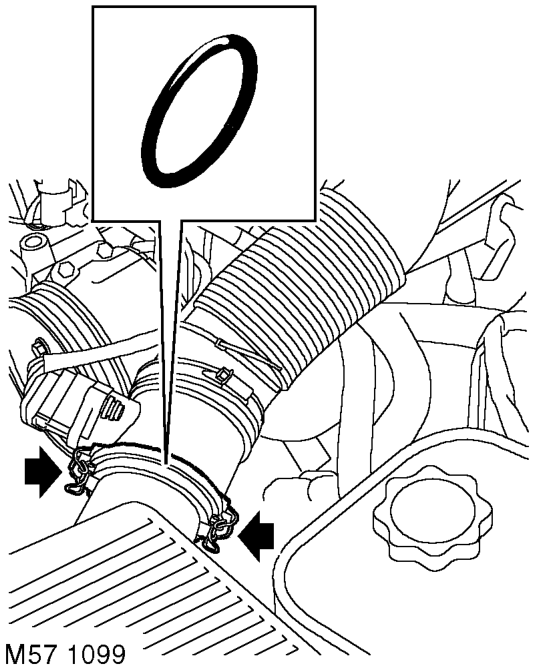
- Release clips and remove air intake hose from air cleaner housing. Note: Pre 03 MY air intake hose illustrated.
- Discard intake 'O' ring and move intake aside for access.
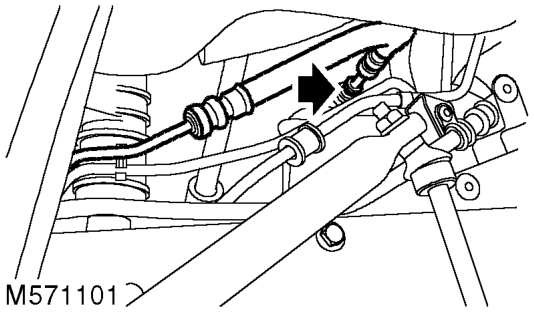
- Loosen union securing high pressure pipe to PAS pump and release pipe.
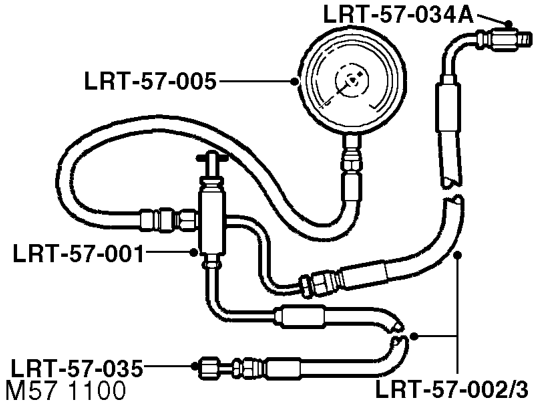
- Fit adaptor LRT-57-034A to high pressure port of PAS pump.
- Fit adaptor LRT-57-035 to existing high pressure hose.
- Fit hose LRT-57-002/3 to each adaptor.
- Fit pressure gauge LRT-57-005 to test valve LRT-57-001
- Connect hoses LRT-57-002/3 to LRT-57-001 and tighten unions.
- Hang pressure gauge in a safe position under bonnet.
- Remove PAS reservoir filler cap, fill to level indicator and refit cap.
- Connect battery earth lead.
- Start engine and allow air to bleed from PAS system by turning steering from lock to lock. Stop engine and check PAS fluid level.
- Ensure steering system and test equipment are free from leaks.
- Maintain maximum fluid level during test.
- Open the test valve on LRT-57-001 and start the engine.
- With the engine at idle, slowly turn the steering wheel and hold on full lock.
- Note the pressure reading on LRT-57-005.
- Repeat the pressure check for the opposite full lock.
- Test pressure should be between 21 and 62 bar, (300 to 900) psi. Dependant on road surface.
- With the engine at idle, centralise the steering wheel. Pressure should read 7 bar (100 psi) or below.
- Pressures outside the above tolerance indicates a fault.
- To determine if fault is in steering pump or steering box, close the valve on LRT-57-001 for a maximum of 5 seconds. Pump damage may occur if test valve is closed for longer periods.
- If gauge does not register between 75 and 103 bar, (1500 psi), (maximum pump pressure), the pump is faulty.
- If maximum pump pressure is correct suspect the steering box.
Parts & tools for this job For Land Rover Discovery
- TOOLTie rod end toolSearch: tie rod end puller
- TOOLBall joint separatorSearch: ball joint separator
- FLUIDPower steering fluidSearch: Land Rover power steering fluid
Links open Amazon search results in a new tab. As an Amazon Associate I earn from qualifying purchases.