
Basic ignition timing
- Make
- Rover
- Model
- 800 Workshop Manual
- Year
- 1996–1999
- Section
- Description and operation › Basic ignition timing
BASIC IGNITION TIMING
Crankshaft position (CKP) sensor
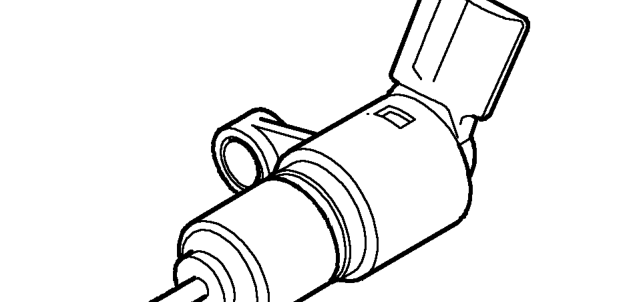
MEMS provides the optimum ignition timing for the relevant engine speed and load. The speed and position of the engine is detected by the CKP sensor.
The sensor incorporates an armature which runs adjacent to a reluctor ring in the flywheel, the reluctor consisting of 30 poles spaced at 10° intervals on KV6 engines, with 6 missing poles 60° apart, or 32 poles spaced at 10° intervals with 4 missing poles at 0° ,120° , 180° , 310° intervals on ’T’ series engines.
When the flywheel rotates, as each pole passes the sensor it disturbs the magnetic field inducing a voltage pulse in the coil. This pulse is detected by the ECM which calculates the number of pulses that occur within a given time, indicating engine speed while the spaces indicate crankshaft position.
Manifold absolute pressure (MAP) sensor
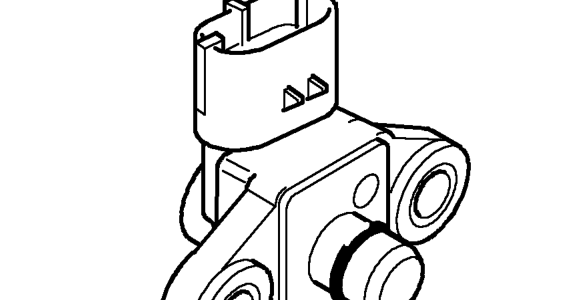
KV6 MAP sensor illustrated
The load signal is provided by the MAP sensor mounted on the manifold chamber on KV6 engines or within the ECM on ’T’ series engines. The sensor converts pressure variations into graduated electrical signals which can be read by the ECM. Changes in manifold pressure provides the ECM with an accurate representation of the load being placed on the engine, thus allowing it to adjust the quantity of fuel being injected and the ignition timing to achieve optimum fueling of the engine.
Parts & tools for this job For 1996 Rover 800
- PARTEngine gasket setSearch: Rover 800 1996 engine gasket set
- TOOLTorque wrenchSearch: 3/8 inch torque wrench
- TOOLFeeler gauge setSearch: feeler gauge set
Links open Amazon search results in a new tab. As an Amazon Associate I earn from qualifying purchases.