
Brake pedal switch (Engine management system - V8)
- Make
- Land Rover
- Model
- Discovery II (UK)
- Section
- Description and operation › Brake pedal switch
Brake pedal switch
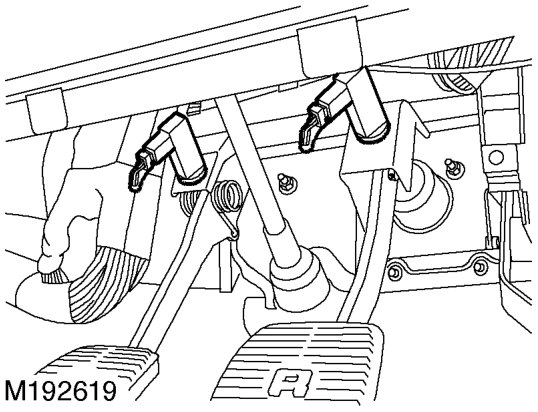
The cruise control ECU has two inputs from the brake pedal switch that determine the position of the brake pedal. One input comes through the BCU and is low when the brake pedal is not pressed. The second input comes directly from the brake pedal switch. This input is high when the brake pedal is not pressed. On vehicles with a manual gearbox, the input from the clutch pedal switch to the cruise control ECU is connected in series with the direct signal from the brake pedal switch.
If the cruise control ECU receives a changed signal from either source, it deactivates cruise control, removing power to the vacuum pump and activating the vacuum control valve releasing all vacuum in the system.
The brake pedal switch also provides the signal to illuminate the brake lamps and the brake input to the SLABS ECU.
Input/Output With the brake pedal and the clutch pedal in the rest position, the cruise control ECU receives 12 Volts.
With the brake pedal pressed, the cruise control ECU receives 0 Volts and a low voltage logic signal from the BCU.
NOTE: If the clutch pedal is pressed, 0 Volts are present at the cruise control ECU irrespective of brake pedal position.
ECU operating parameters (connector connected)
| Pin No. | Condition | Volts | Ohms |
|---|---|---|---|
| 1 | Ignition in position II, brake pedal released, clutch pedal released | 12 | |
| 1 | Ignition in position II, brake pedal pressed, clutch pedal released | More than 10,000 | |
| 1 | Ignition in position II, brake pedal released, clutch pedal pressed | More than 10,000 |
Parts & tools for this job For Land Rover Discovery
- TOOLOBD2 scannerSearch: OBD2 scanner
- TOOLDigital multimeterSearch: automotive digital multimeter
- TOOLBack-probe test leadsSearch: back probe test leads
Links open Amazon search results in a new tab. As an Amazon Associate I earn from qualifying purchases.